I love water features – not over-the-top fountains. I don’t even need pumps and moving water. Just water, water plants and fish. In Sydney I have a few water indulgences, but they are all at a micro level – some bowls with water and water plants as well as a wine barrel that is home to some goldfish and guppies. Well, I do live in a townhouse.
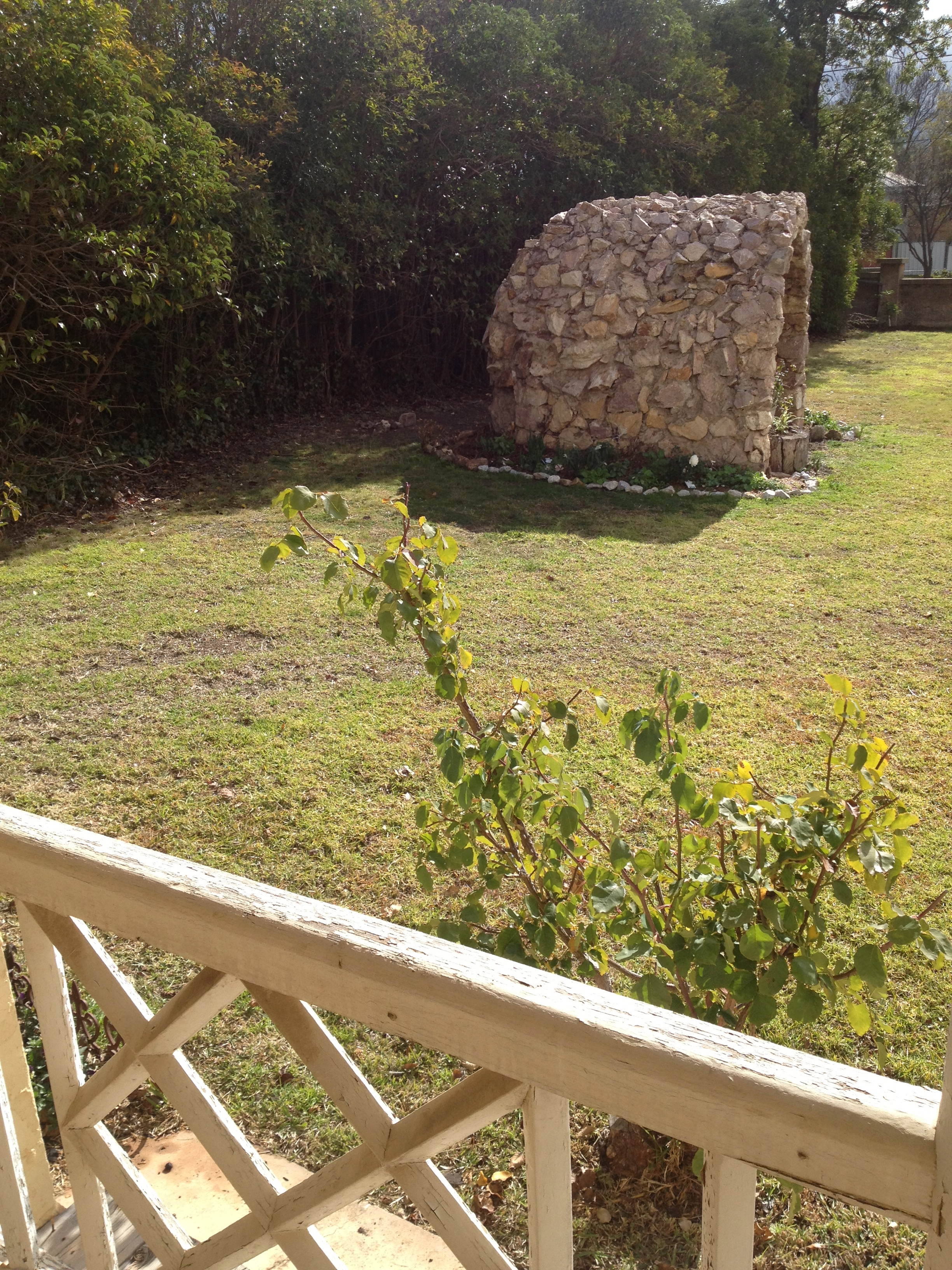
It will be hard not to have something at the Convent. I’ve put some thought into what and where and the current thinking is that I may put an inground (sounds like a swimming pool) pond between the Grotto and the Chapel verandah. It will be reasonably protected from some of the harsher sunny positions yet still get good sun for waterlillies and can be enjoyed from the verandah.
At this stage, I think I will dig it out and put in a liner-type pool to give me a bit more flexibility, as I have no idea what I will hit once I start digging. Some areas are relatively easy, others have lots of roots and some are full of rock. I’ve also seen some examples of ponds that include a “wetlands” – an area next to the main pond which is lined with a shallower area and filled with soil, but kept wet for water-logged plants, which I think would be great for watercress. Sometimes I get carried away and need to make sure it doesn’t turn into a full dam with ducks! What if I could also cultivate yabbies or trout! Hmm, maybe a concept for the block next door…
Anyway, just an idea at present. I have plenty of gardening to keep me busy before starting this. The front wall is Priority # 1 for now. I’ll try not to get distracted and have another incomplete area… maybe.
I’m thinking this area between the Grotto and Chapel verandah may work.
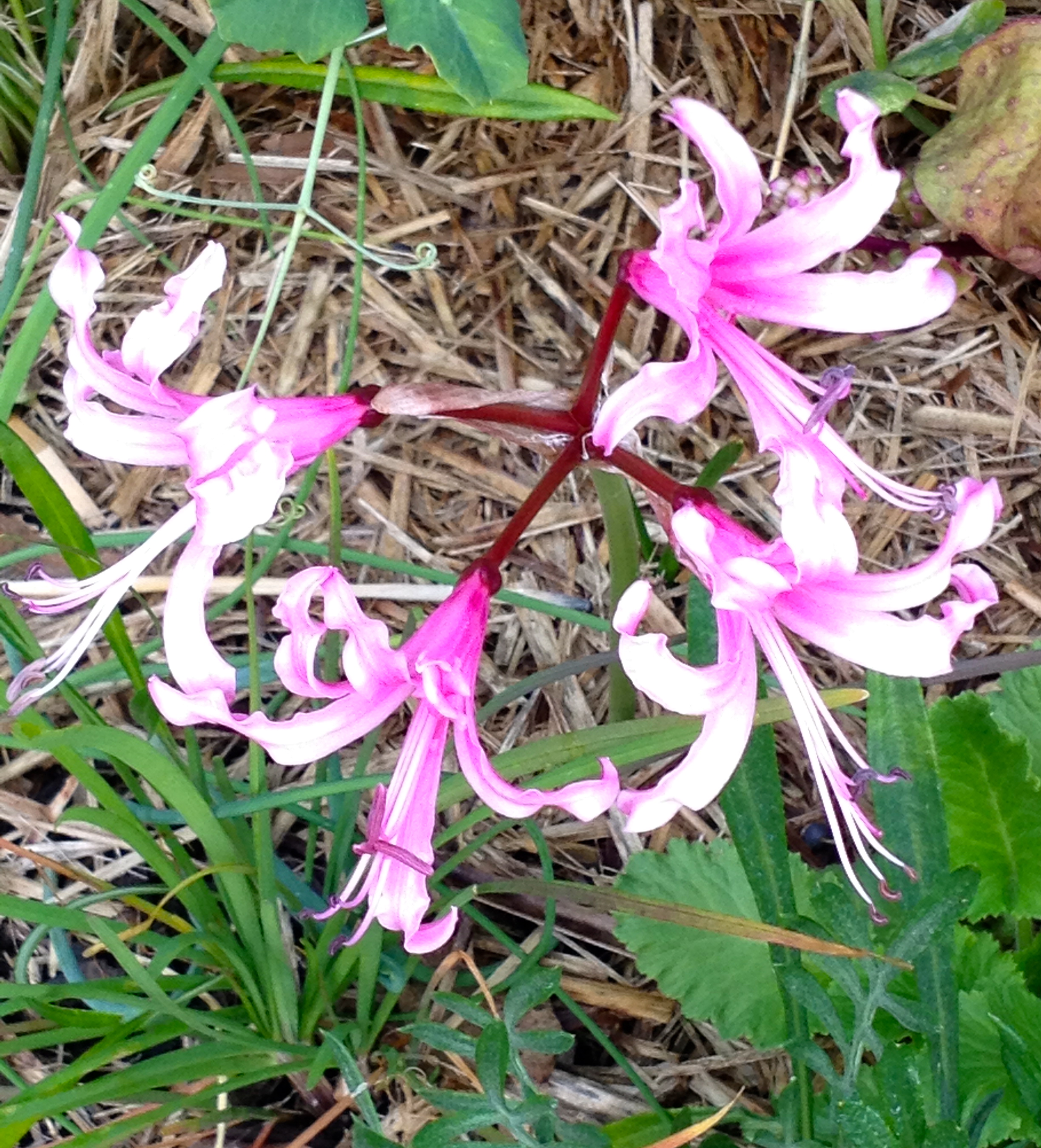
First cab off the rank – Nerines. Nanna grew these in Adelaide.
Bulbs are always exciting and rewarding. Firstly waiting to see if anything comes up. Then waiting for the flowers (even more exciting if you are a tad undisciplined like me and don’t remember what’s been planted where). And then the next year, wondering if anything has survived from one year to the next and repeating the cycle, with the addition of seeing if they have multiplied.
Snowflake – common but one of the prettiestGrape Hyacinth – tiny but so cute
It’s fitting that we have just had the shortest day of the year which means that the days will now get longer, more sun and we start slowly moving towards Spring and new growth. Last week I saw the Snowflake. This week there was the Grape Hyacinth with a bit more action and promise of things to come, as the bulbs are all starting to make their way up with the hint of flowers. Hopefully the Convent will have many more bulbs in years to come (although I also hope that much of this is from bulbs naturalising rather than me continuing to buy and plant!)
I’ll post more as the bulbs start to pay their way.
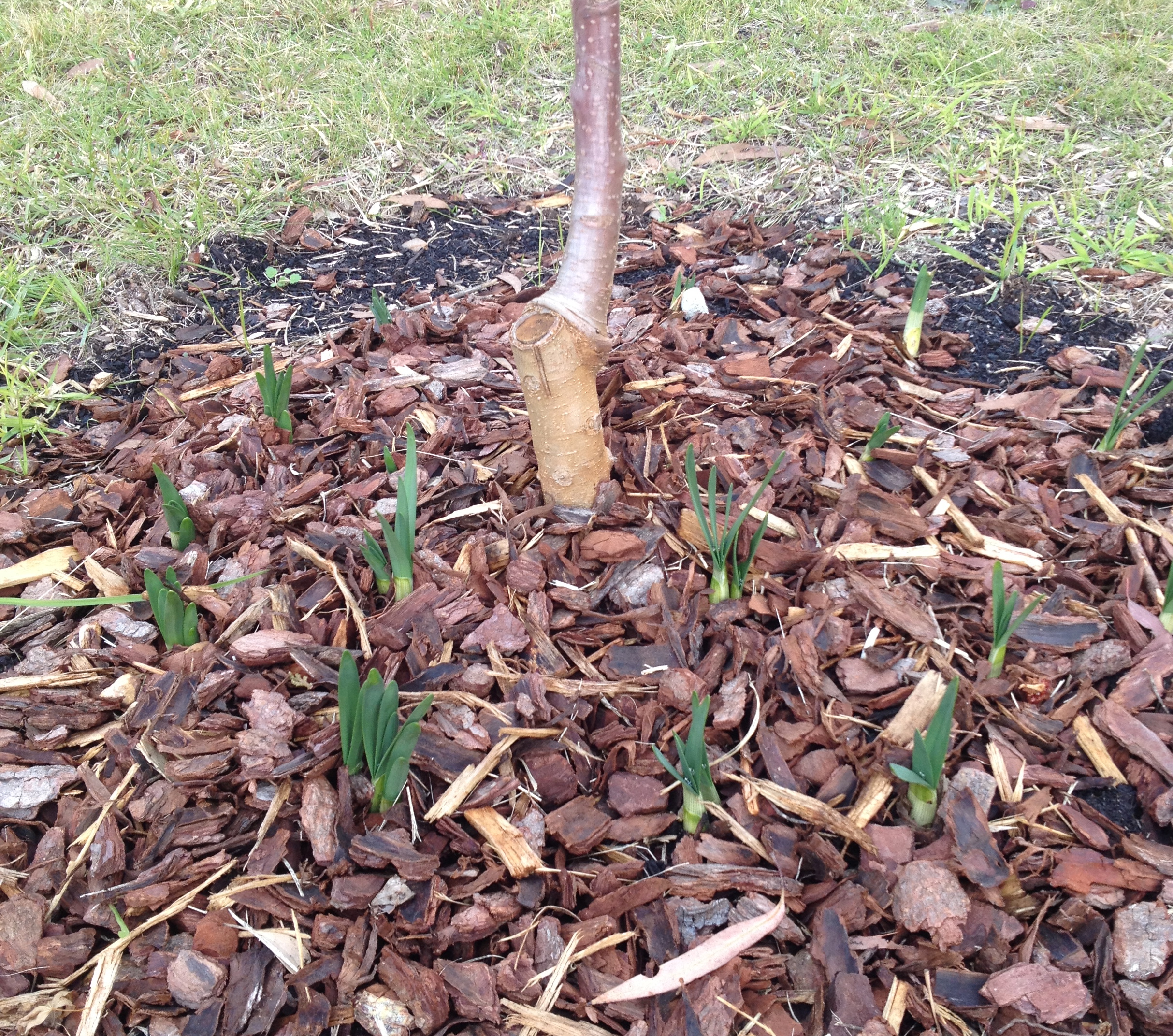
I’m told these are Sparaxis. A ready-made bonus from the Convent. Looking forward to seeing these pop up throughout the front lawn.Ummm – outside the Grotto. Maybe Hyacinths?? Looks like quite a few bulbs are preparing to flower, not just teasing with leafy growth.Daffodils around the new flowering Crabapple – just peeping throughThe Freesias – hoping for some glory here under the Catoneaster. And really want them to multiply in future years.
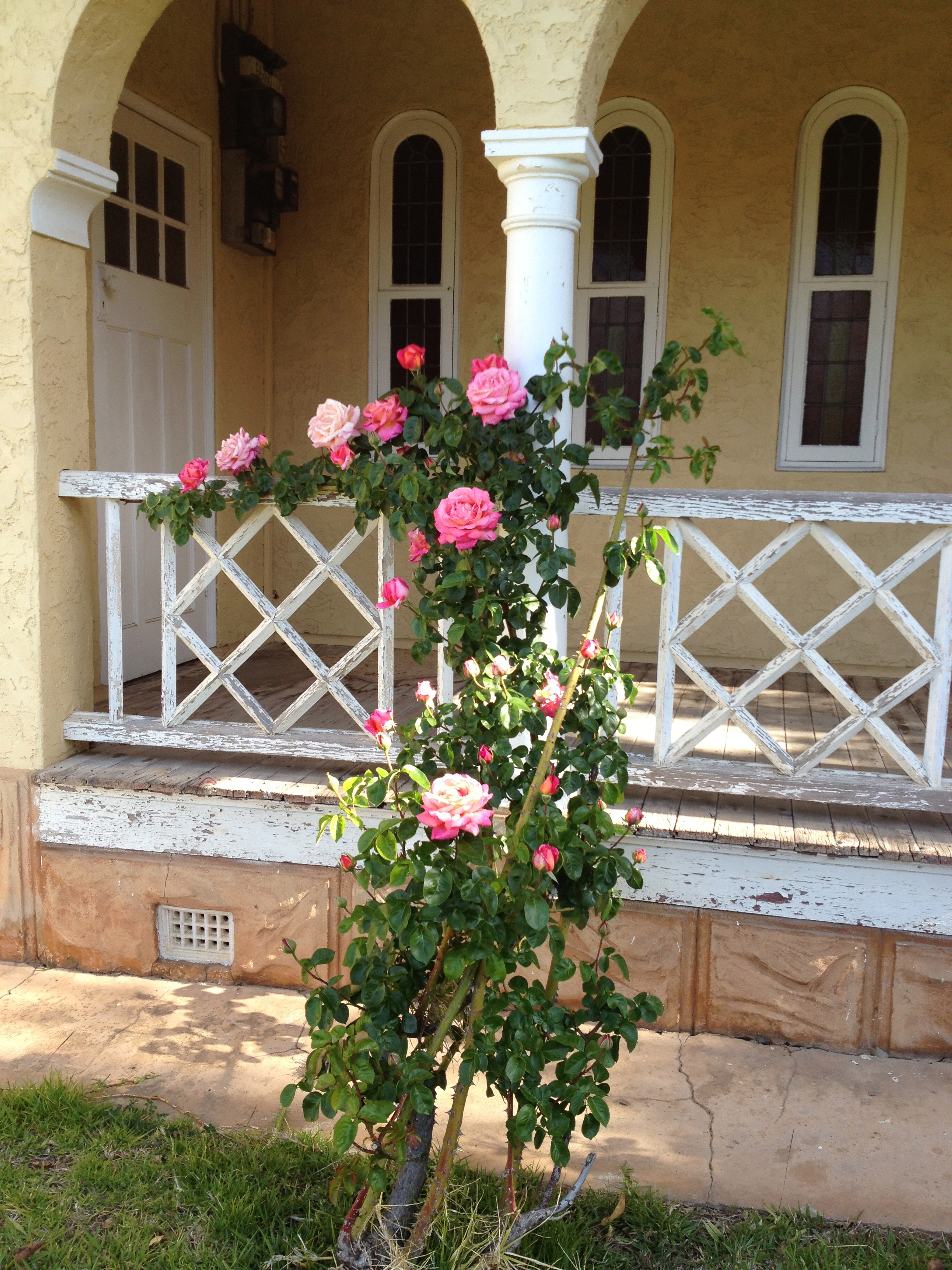
I’ve mentioned before that the Convent has a history of having wonderful roses, with the nuns maintaining trellises of showy roses. This is a bit of a lazy blog. I’m just going to list the roses at the Convent here and will update it as I plant more, just so I discipline myself to write them down.
Good Samaritan – deep crimson and obviously the signature rose for the Convent. There are two standards at the step of my back porch that I planted and two of the older original roses out front also seem to be the same.
Pierre de Ronsard – blowsy dusk pink and prolific flowerers. They should look great against the original unpainted cement block garage wall. I had them in a previously life and miss them. They are a beautiful rose and climb well. I also have a newer variety of Burgundy in a Floribunda out the front of the Chapel as well as a Blushing Pierre de Ronsard – very pale, with tinges of pink as it ages, to climb over the Grotto.
Duchesse de Brabant, bought under the advice of L and a lovely very old rose species. Planted next to the cyclone fence on Sister Kath’s side – I hope it climbs.
Climbing Icebergs x 2. Both on the back wall which in time should be covered with Passionfruit and climbing roses, if the grand plan works out.
Six standard Icebergs as sentinels lining the front path to the entrance.
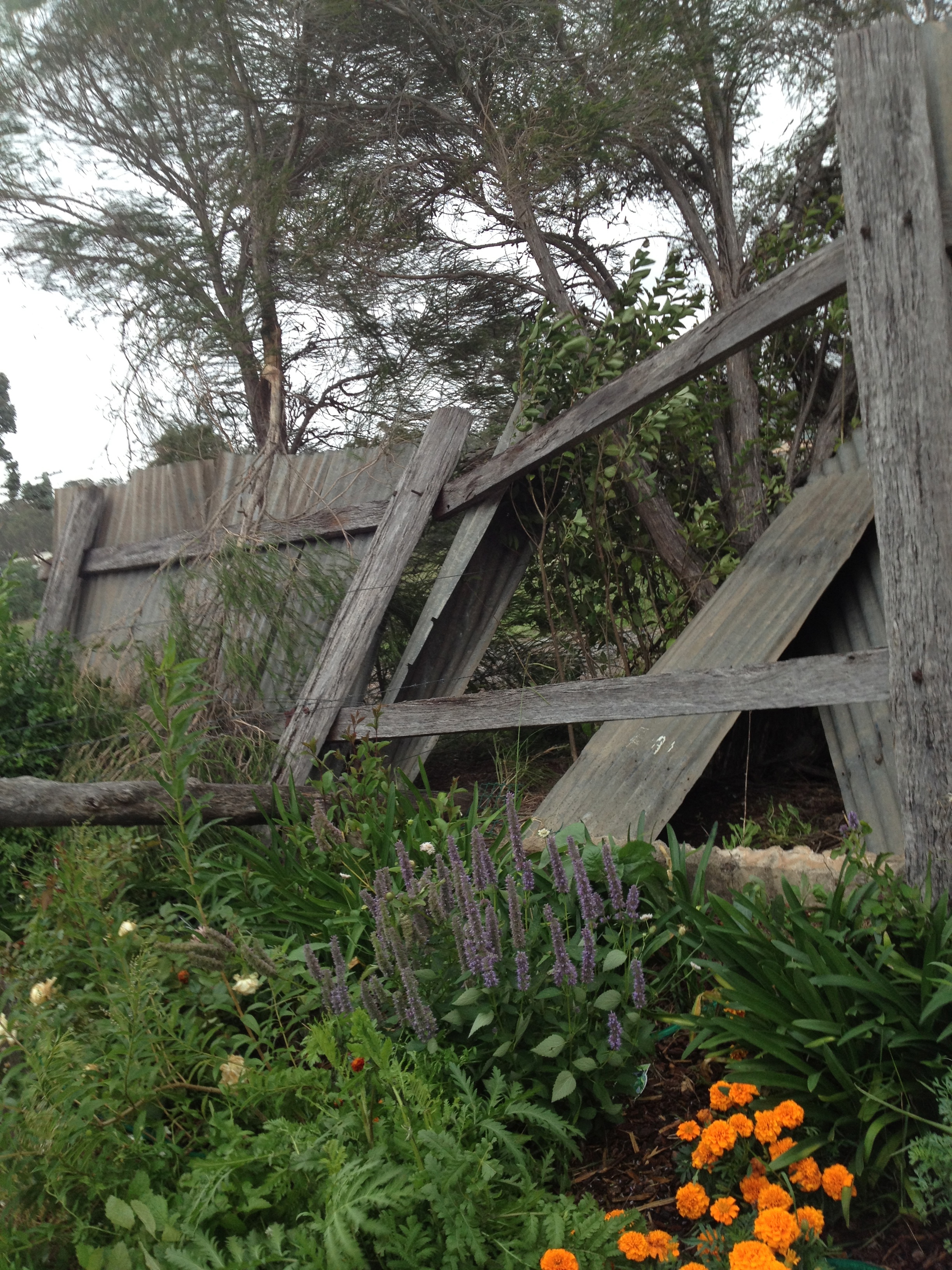
Crepuscule – a gorgeous and voracious climbing pale apricot. It has already outpaced all the other roses, despite being a victim of the artist fence accident. Now has a new climbing home on the recently built cyclone fence section.
Lamarque – a gracious old rambling white rose in the back garden bed – yet to kick in and I have great expectations of.
Cecile Brunner – pink buttonhold climber of course, on the back wall and already taking off as well as one on the Grotto.
Pinkie – an old fashioned favourite and prolific climber that is one of the Grotto roses.
Cottage White Climbing Multiflora, to partner the other side of the Grotto.
Champion – tiny roses in pots on the Chapel verandah.
The Fairy – a pink groundcover that loves to trail and strike itself along the back porch area. This is so successful, I’m thinking of planting it all that side of the house.
Dream Weaver – hopefully true to its name as a rambler – pink, on the front wall.
Atomic Blonde – a newer white variety from Swanes that I hope will be a wanderer along the newly replaced cyclone fence.
Mme Alfred Carriere – another pale climber on the back wall.
David Austen Molineux – a yellow in the back garden bed.
David Austen Graham Thomas – a yellow climber on the back wall which is supposed to be one of the lovelier yellow roses.
Two climbing Mister Lincolns in deep red on the front wall. Another two have been planted on the Church side of the wall.
An Albertine – classic pink on the front wall.
Mme Isaac Perriere – supposedly a rampant deep pink rose and named after a rather buxom aristocrat. I tend to think she may be one of the “personality” roses and is planted in an area on the front wall that could do with some cheering up.
Peace – a classic in a Hybrid tea rose out the front of the Chapel.
Angel Face – a pink Floribunda
Fruitee – a deep orange Floribunda planted at the front of the house with the old roses.
Jude the Obscure – a lovely pale creamy apricot arching David Austen bush.
Queen Elizabeth – a pink shrub rose.
Elina – A cream hybrid tea rose.
Renae – a pink thornless climber on the front wall.
St Cecilia – a pink David Austen bushy shrub.
A plethora of little carpet roses and tiny garden roses from Bunnings – white, red and yellow, all of which are nameless but work hard at flowering.
About half a dozen lovely old rose bushes that have survived for many years, but I have no idea on their variety.
It’s still way too cold to prune but I’m looking forward to seeing how well all the roses develop and grow once the weather warms up.
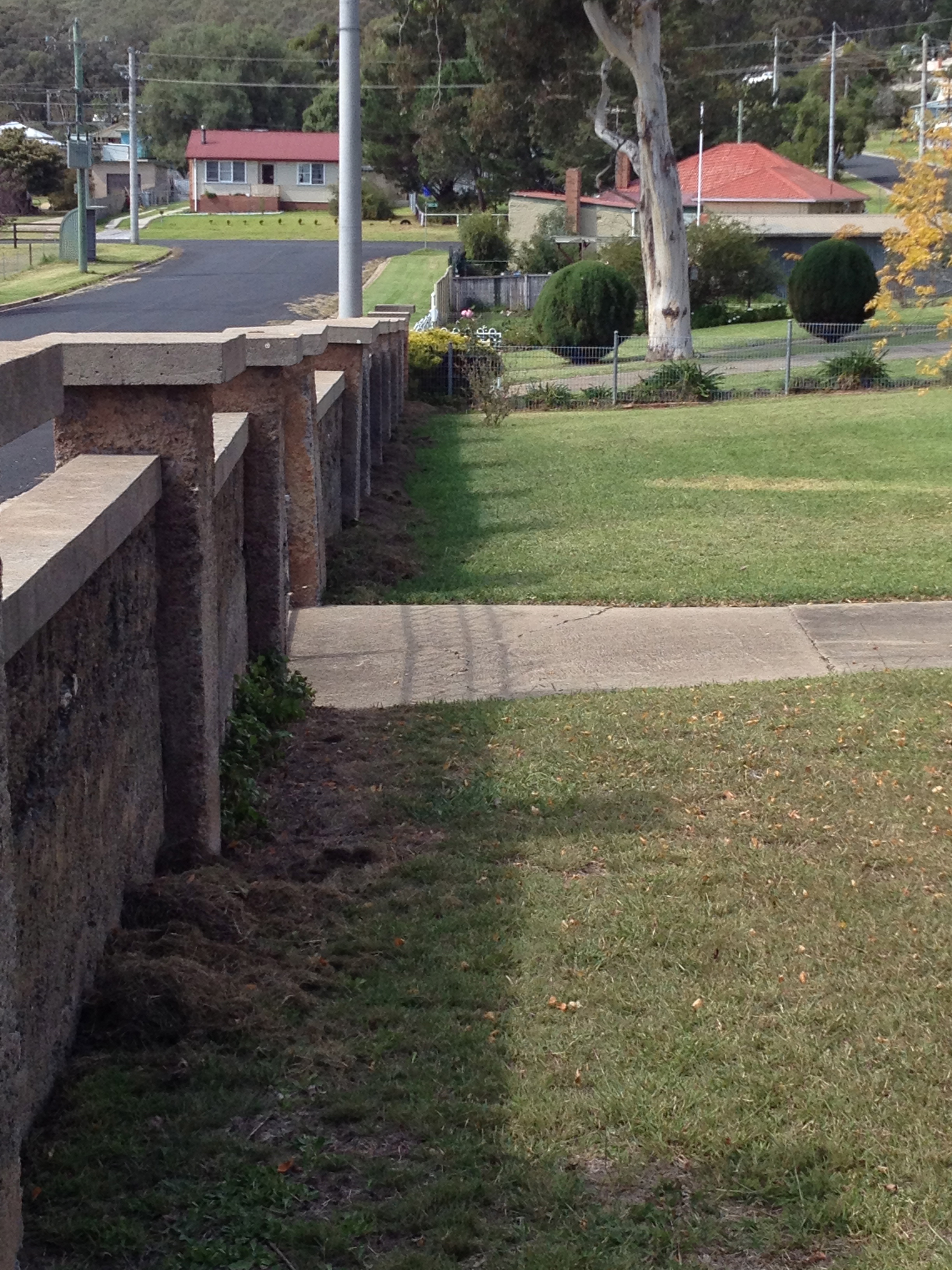
So far I haven’t been able to tell if there were ever any garden beds against the front wall which is an ash brick fence, quite common in this area. A past resident, Father Peter, said there used to be a hedge and will try and find some photos for me.
For now, there are no plantings at all along the wall – the grass runs right up to the brickwork which accentuates the bareness of the block. My plan is to have a deep bed running along the wall with some sweeps of beds emerging so it doesn’t look like a harsh straight line. The wall provides some shading and protection which hopefully means I can grow some of my favourites like camellias, azaleas and gardenias which I plan to mix in with ornamental weeping maples and cherry trees for height. I’m looking at filling in mid height with plants such as salvias for lots of colour and attracting birds, then adding in lots of perennials – and lets not forget heaps of herbs and masses of roses, including old fashioned ramblers.
My initial impression was that the soil near the wall was rock hard and I needed to build it up with digging, newspaper, layers of mulch, followed by compost over perhaps a 6 – 8 month period. However after some rainfall the past few weeks, I was happily surprised over the weekend when I experimented to find that the soil was relatively easy to dig and appeared to be good quality with plenty of cheery and healthy worms. This should significantly cut down on work and speed up the establishment of the beds. Fired up with this discovery, I promptly planted two white Azaleas either side of the front gate.
In the past with the few gardens I’ve had (I change properties rarely), the task was much less daunting – it was just a matter of improving the basics of what was already established. In this case it is much more a challenge of creating much of the garden from a blank canvas – and it’s a big garden. This means a bit more discipline and thought than required in the past. In the meantime, I’m falling back to my usual pattern- just buying what I like, putting it in and then working the beds out from there. Other than the gate Azaleas, so far I have 2 Lilacs, a transplanted Elderberry (what a mistake to think this would work in the veggie bed!), and another Azalea. A rambling rose, a Rhododendron and 2 Camellias await in pots for their next home. Oh, and a few more plants have been ordered from Diggers, including an Albertine Rose.
This was a weekend of all steps forward. As an added bonus, I also had friends staying. Whilst it’s hardly resort-style with us all on airbeds with sleeping bags, I really appreciate them making the trek and seeing the Convent during its different stages.
After many many months of my tumbled down fence post Cementa, it was finally fixed. And what a difference! It gives me a good idea of how it will look when the whole of the galavised iron fence comes down sometime in the future. It’s also a treat to get a working driveway gate back and gives me more area to plant climbers on – Atomic Blonde climbing rose quickly found a home and the Crepuscule which was already there was readjusted after losing its old climbing frame.
From this …… to this.
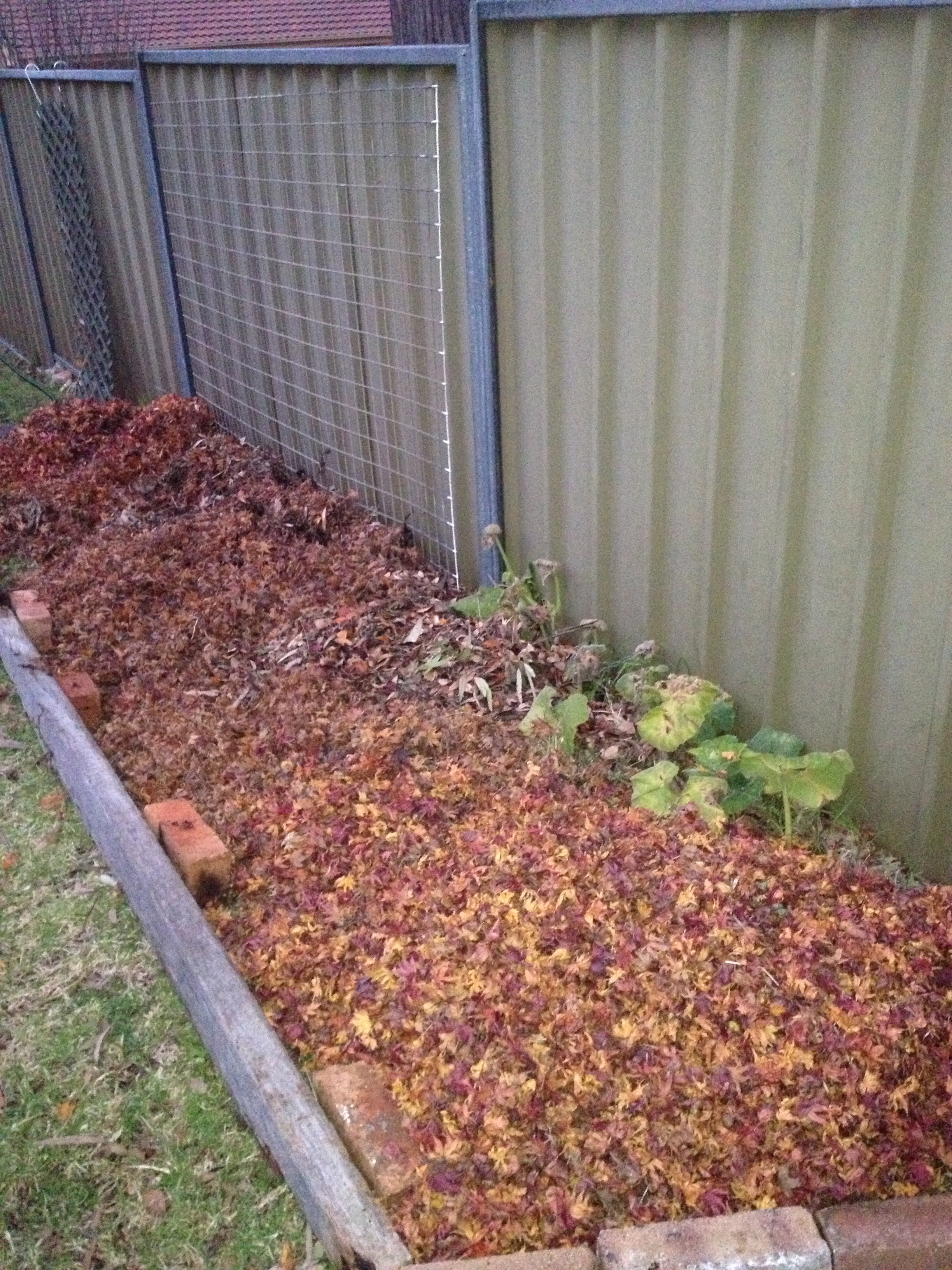
In an additional win, I used some of the old timbers to rebuild and enlarge the original pumpkin patch. Fuelled with success from my first Summer, I want to plant more pumpkins, zucchini and cucumbers. The first two take up so much space that I really don’t want to sacrifice in the veg beds, so this seemed like a great idea. The mesh wiring from the verandah makes a great climbing frame as well. It’s rewarding to be able to reuse materials where possible.
The extended pumpkin patch
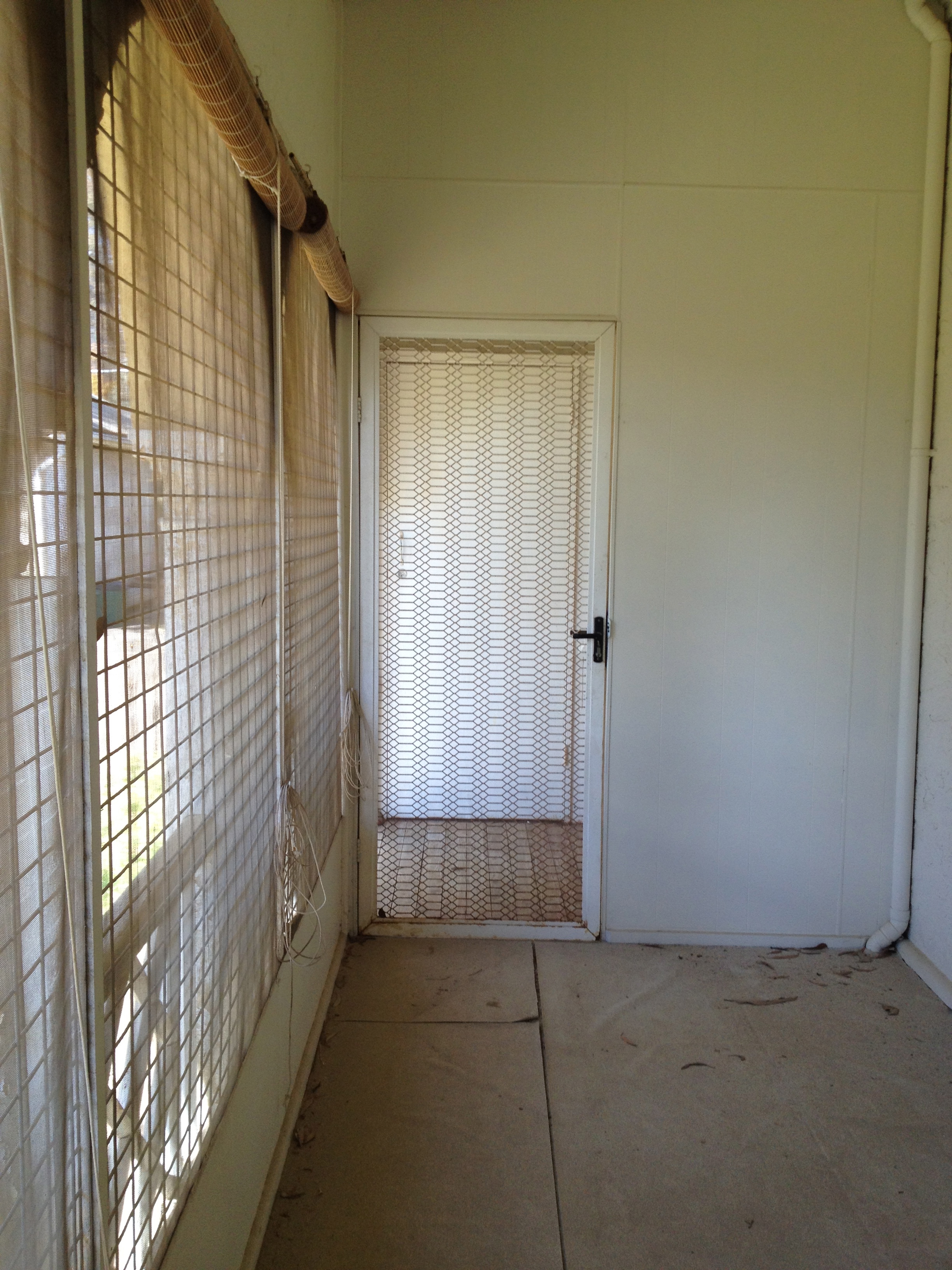
The other big advancement was the demolition of the enclosure for the back verandah, which gives me a lovely protected balcony/verandah/porch off the back bedroom and lounge with fantastic views. The original verandah was an eyesore, but this is even better than expected.
The painters will be starting within the next week with both the interior and exterior getting the attention it so badly deserves. Then come the floors …
A photo that showed so much. I haven’t seen this front porch up close before – it is now a sunroom. Also note the hedge to the left and bountiful bed of annuals.
The other week I spent some time at the wonderful Kandos Museum which is a treasure trove of Kandos social history, looking up old photos of the garden. The purpose was two-fold: both for personal interest given I’m restoring and creating the garden, as well as thinking that attendees for the Kandos Garden Fair would be interested in seeing the original photos when the Convent gardens are open for viewing in November.
The garden provided a backdrop for many school photos. The Convent had many locals captured on film a the front steps. Here we can see the formal garden bed which is well established. Also note the conifers framing the photo.
The visit paid off. The Museum has plenty of information and photos on the Convent over the years, however it was a little bittersweet as I realised how much of the beautiful gardens has been lost over the years.
The Good Samaritan nuns lived at the Convent from 1930 into the ’70s when the school closed. That was the hey-day for the gardens with obviously keen gardeners ably supported by locals and recruited school boys.
An early photo of a long-gone driveway and the beginnings of a hedge that was and no longer is.
The garden was considered an important part of the Convent with an original garden layout planned. Whilst the garden changed over the years whilst the nuns were in residence, it always featured formal hedges, many roses and abundant flower beds. I understand the nuns also grew their own veg which would have been in keeping with their humble and frugal practices.
I was surprised to see that there had been a substantial trimmed hedge down the left side of the house where I knew at one time there had been driveway access. Locals had told me before that the now rampant sky-high privet on the other side fence had also once been a neat and trim hedge.
I also found that there had been other formal garden beds within the front lawn and that a path had once run across the front of the house, with prolific flower beds.The formal circular garden bed at the front of the Convent had always been a showpiece – until the ’70s when the ‘bush rock’ garden was installed which has significantly damaged the concrete. At once stage the paths were all beautifully edged and roses sprawled along trellises.
Nuns at the front circular bed. Note the path capping which has now gone. I suspect all this concrete has been replaced given these cracks now don’t show. Also note the rose trellises in the background.
The photos fell off after the nuns departed in the ’70s and the building was used as a Presbytery for the resident Priest. With a single person living there, the gardens appear to have been adapted to low maintenance.
Whilst I don’t intend to reproduce the garden, it does give me some good ideas and inspiration. I’m endeavouring to restore the privet hedge along the right side, I’m certainly replanting the central circular garden bed as a feature, the front urns remain and are in use at the front steps and the Grotto will probably look better than ever. The roses which were once such a feature are going back in at an alarming rate.
Most likely taken in the ’80s with the ‘modernised’ bush rock central bed.
Gardens are always works in progress and this one is no exception. Just that there’s a lot of work which will take many years to come to fruition. The Convent is a patient building which I’m sure plans to be around for many more years to come and seems to be happily overseeing the efforts to date.
Another new aspect of the Convent for me. I can’t imagine plantings down the right side looking a the Convent today. I also think this shows part of the now dismantled old septic structure. Note the dramatic backdrop of the Coomber Mellon ranges.This photo did trigger some regret at what it was and could have been – seeing the old structured path and what appears to be garden paths running across the front of the building which are no longer there.
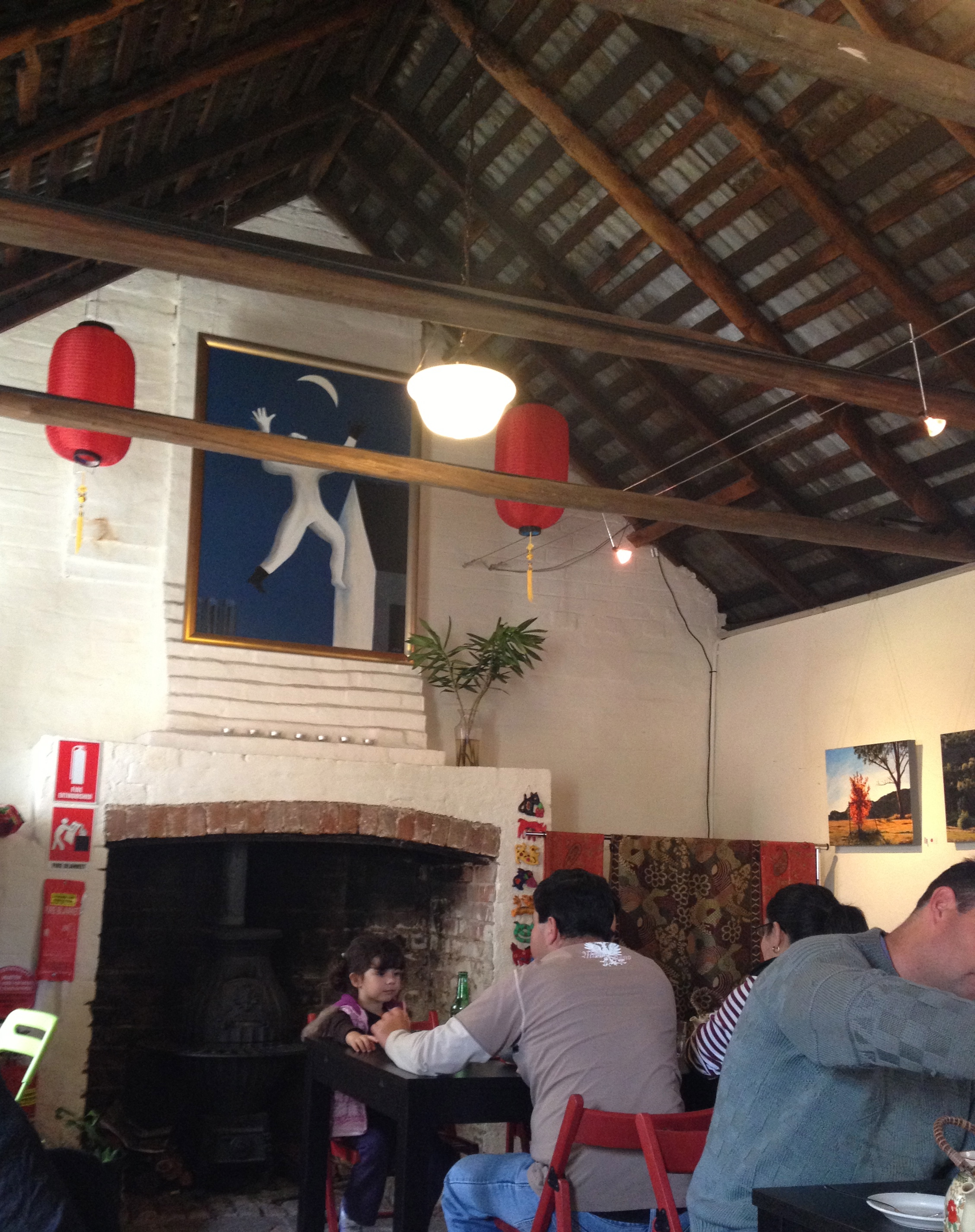
One of my favourite places for Yum Cha – and that includes Sydney – is 28 Nine 99 – an unexpected Yum Cha delight in Rylstone.
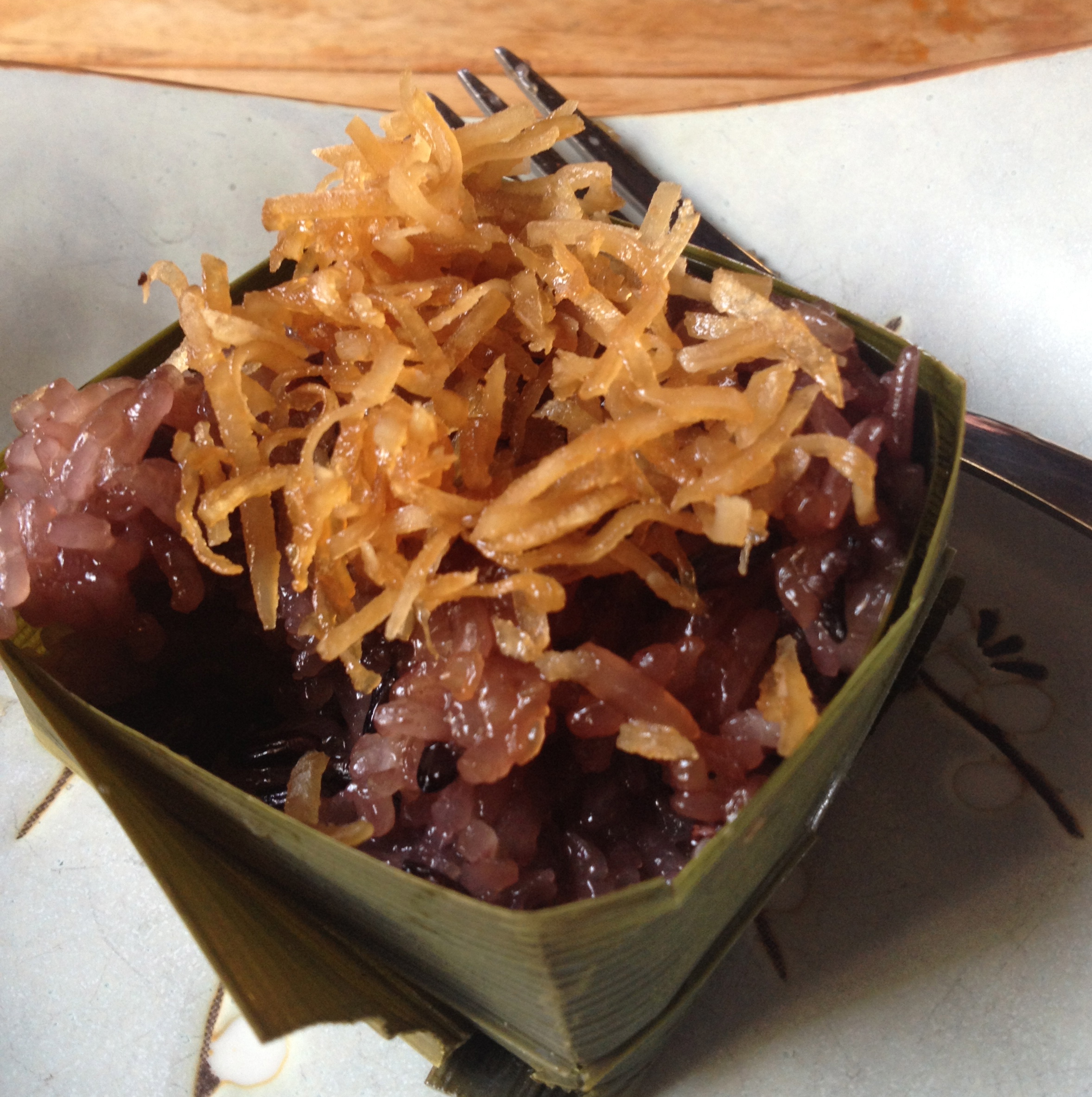
My favourite – black sticky rice with coconut
Nestled in the charmingly restored historic Bridgeview Inn is what initially appears to be a small shop with delightful gifts, including exotic scarves and enticing Chinese teapots and cups. It houses a wonderful Yum Cha house owned by the equally wonderful and delightful Na Lan. Forget laden trolleys lurching around piled high with bamboo steamers. Here you get to select from a broad variety of dumplings. My friends and I usually opt for the selection of 8 mixed with an additional ‘special’ piece which for me is always the Black Sticky Rice with Coconut. There’s also a pot of tea from a wide choice but I never go past the Oolong.
The shop can cater for a surprising number of people with a back courtyard, the gallery and even tables in the Community Garden out the back where you can wander to examine the locally grown veg. I’d encourage you to book before going, particularly for Sunday lunch.
What a surprise! Have a quick tour around Kandos – some of the highlights include the Rotunda, the Railway Station, Railway Hotel and the old Bucket Way.
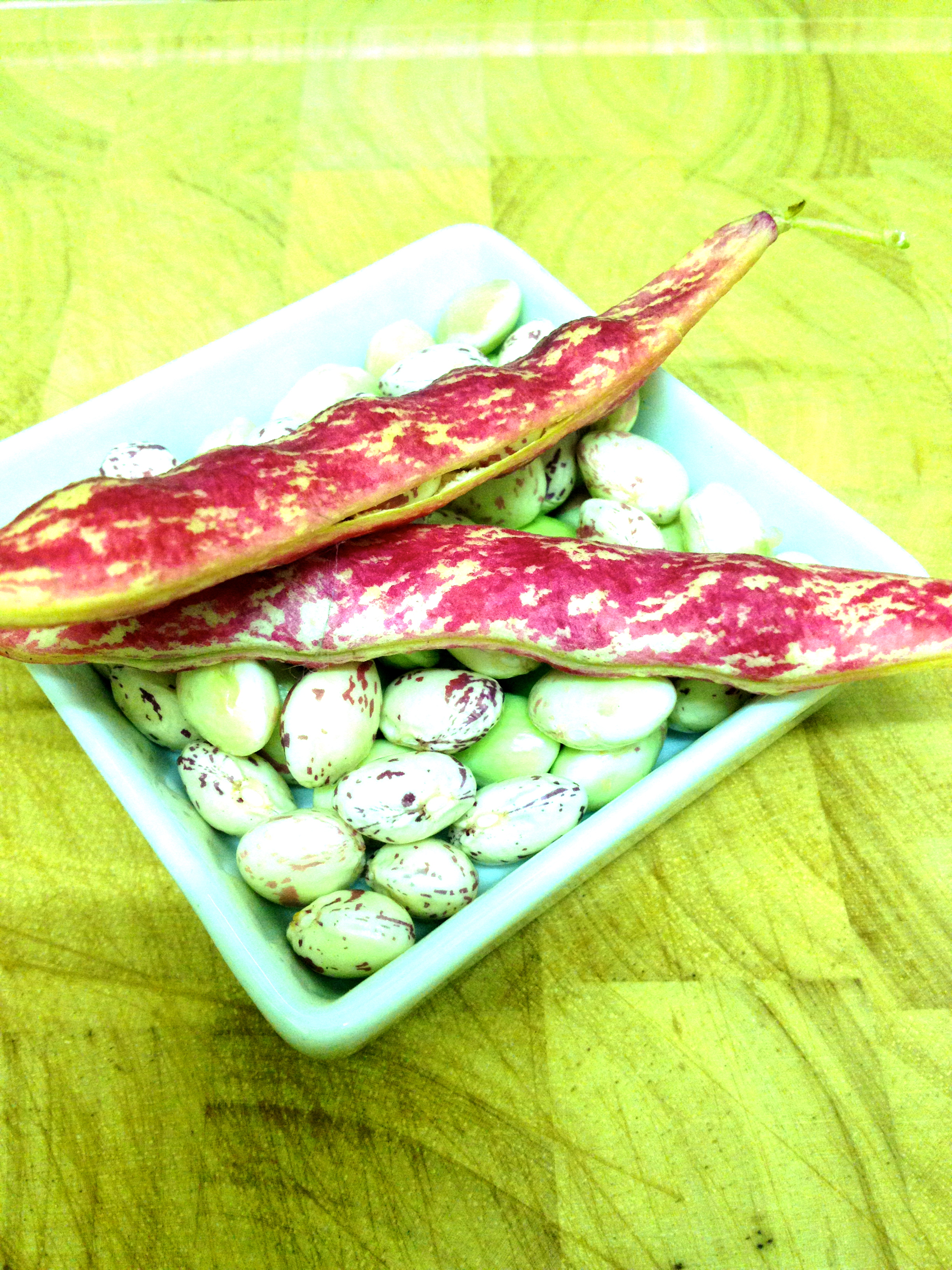
These were by no means the most productive plant I’ve grown. Only a few pods appeared on most plants (although in all fairness, they were not sown in the more productive soil). However were probably the most satisfying. The plants came up quickly and the pods were so pretty. It was surprising to see the beans reflected the colourful pods so closely.
Also, whilst most other plants need to be dealt with immediately, you have the luxury of letting these mature and age on the vine before picking them and then can just dry them. I only have a small jar from my efforts, but am very proud of them and treat them like they are Jack’s beans from Jack and the Beanstalk.
I plan to use them in future in a very special Minestrone. Expect more Borlotti Beans in my future.
Whilst the garden is in reasonable condition whilst waiting to get through Winter and the plants are becoming dormant, I’m still surprised at how much I’m finding to do outdoors.
This trip I’ve:
Planted a Judas Tree out the front. The front yard still needs a few more substantial plantings to fill it out and I couldn’t go past this name. It’s also a beautiful flowering ornamental tree
Planted more bulbs – this time around the newly planted trees. Mainly pretty little Snowflakes
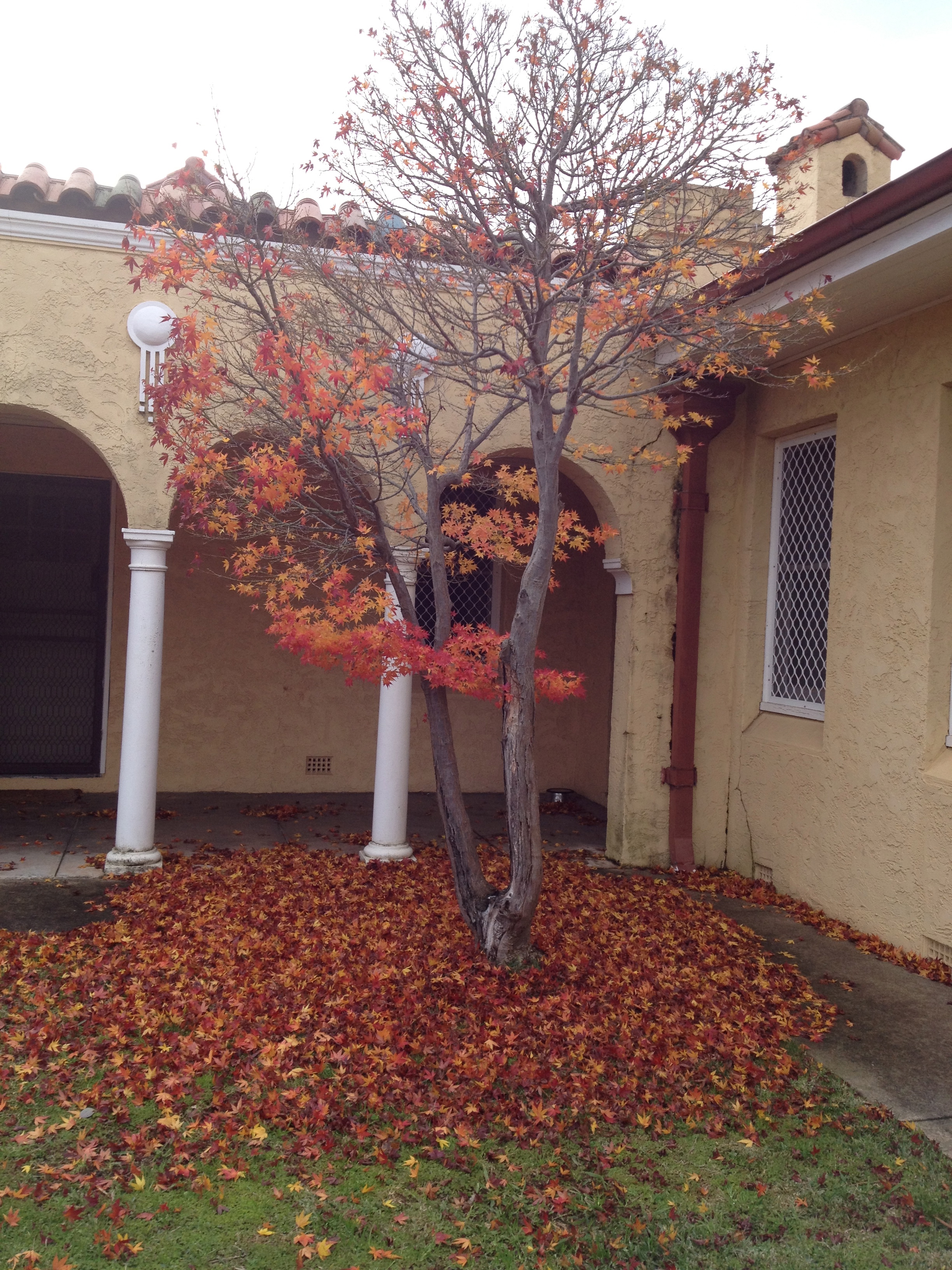
Added another Tumbler Compost Bin to the garden collateral, which I put together myself and have already filled with the Maple leaves that went from full red to fully dropped over the weekend
Build a garden bed in what was originally a troublesome bare rock-hard area of the garden off the Chapel porch. The jury is still out on this one, but in general I’m pleased with how this area is progressing. The bed contains Pentestemon and Heartsease (a personal favourite)
Planted Autumn White Crocuses in the central front garden bed
Weed sprayed the Ivy that was beginning to peek through again at the Grotto
Dean mowed the lawn which should now stay in reasonable shape through Winter
Visited the local Museum to get photos of the original Convent garden.
The garden in earlier daysIn grander gardening days
This latter point was a bit disappointing as I found that the Convent used to have beautiful garden paths with edging as well as well trimmed hedges and garden beds that have all disappeared. It was particularly hard to see how beautiful the central garden bed once was – considering the concrete is so badly damaged around the edges from where they were broken to wedge in the bush rock (which I have now removed).
The local Museum is well worth a visit – housing the social history of the town, which is unusual in that it is a 20th century industrial town. As another Spanish Mission (ex-Church) building, it is considered a sister building to the Convent.
All-in-all a good weekend as I now prepare for the work to begin in earnest on the inside. The painters are planning to start in the next two weeks with floors to follow afterwards.
................... for lovers of ice cream. Your free on line magazine for sweet frozen treats. Recipes, inspiration, artisanal ideas for your delectation.















 CONVENT AND CHAPEL