The exterior of the cafe – indoor and outdoor seating
This was one of my first introductions to Kandos and is a great example of the friendly townsfolk here. Sue and Dave, the proprietors, take great care with their unique business and also make a significant effort in supporting the local community. Now coming here is more like dropping in to old friends rather than somewhere to go for lunch.
The name of the cafe relates to it being the old railway station. The train line unfortunately no longer runs through Kandos regularly, although infrequently there is a tourist service which is a sight to behold. It would be so wonderful if the train still continued through from Lithgow to Kandos.
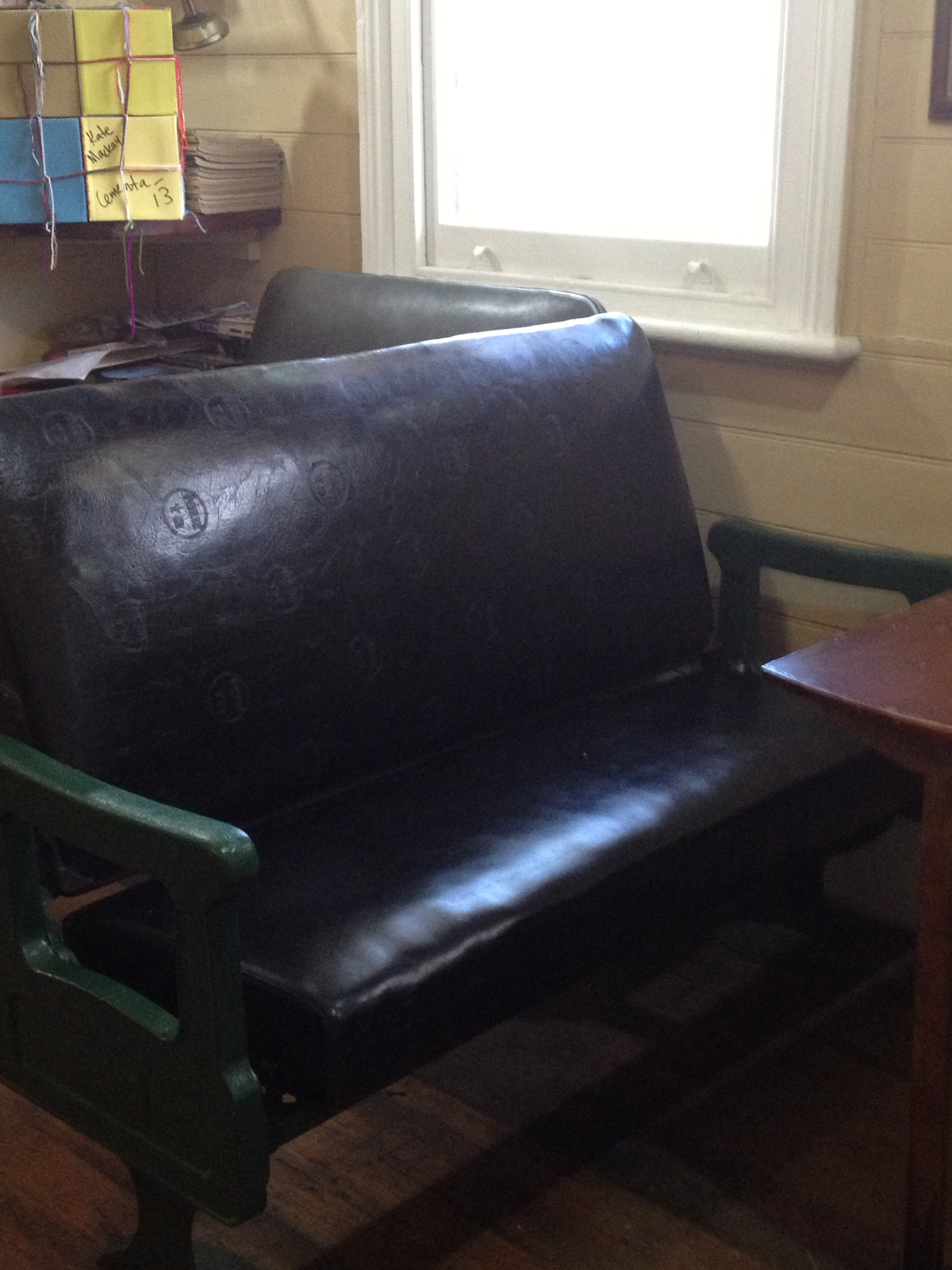
As the old Kandos railway station, it is in a great location and perfect for a quiet respite and refuel. The building sits alongside the tracks and the interior reflects its railway heritage, with seating from old old train seats and carriage fittings throughout.
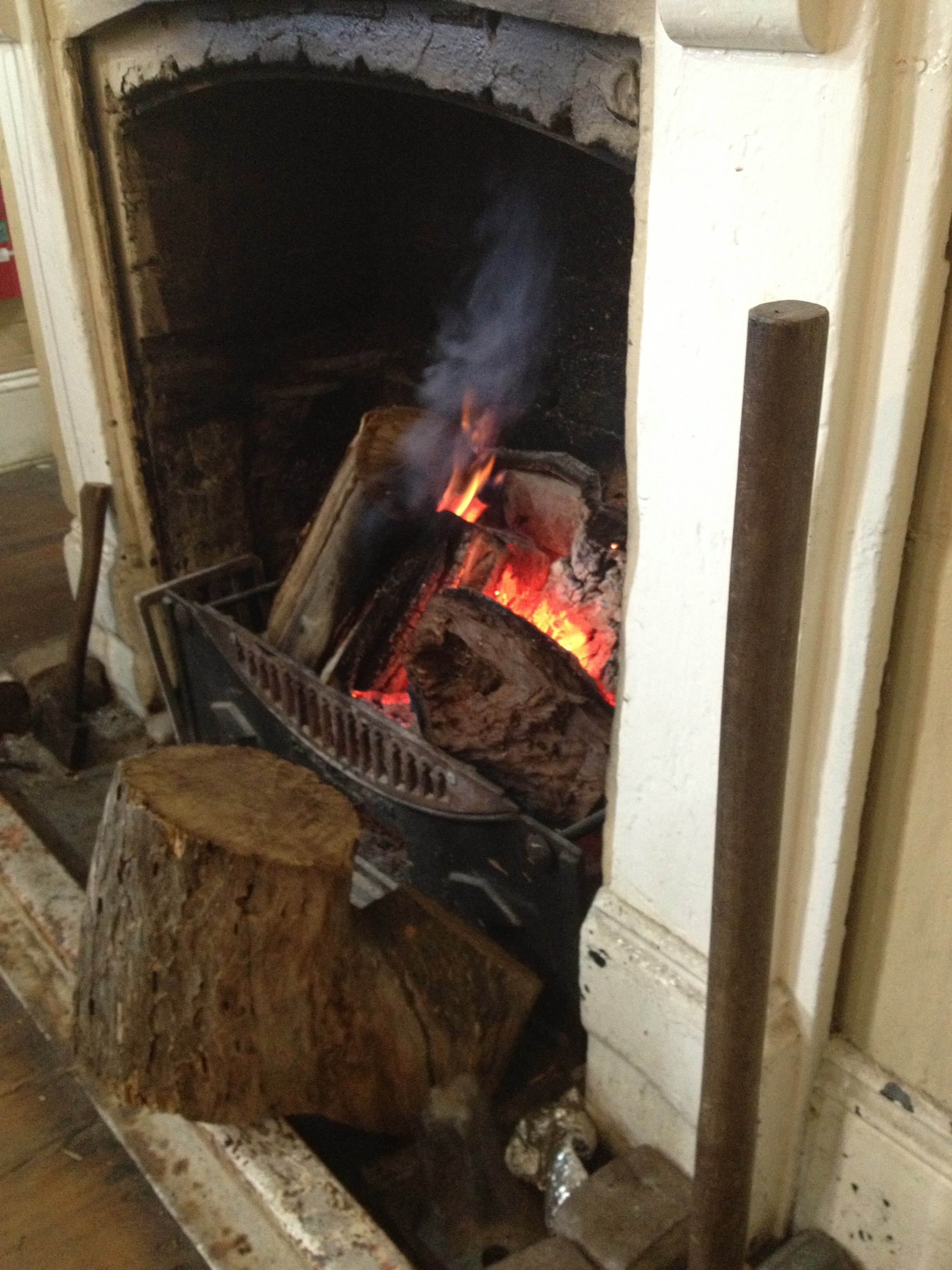
In Winter there is an open fire and in warmer weather occasionally movies are shown on a projector across the railway line. Outside you can view some interesting local sculptures.
A great place to drop in for a good meal, a coffee and some information on the local area, as it also serves as the local Tourist Information Centre. The cafe is located at the entrance to town at the start of the main street just off the Railway Green where the major local events are often held.
When I first thought of a country property, one of my key requirements was ‘No Work Required’. I’m not sure how I missed this with the Convent but tend to think it was price, the Convent, the area and falling in love. Anyway, it has put me into the unfamiliar territory of a complete renovation – and lots and lots of decisions.
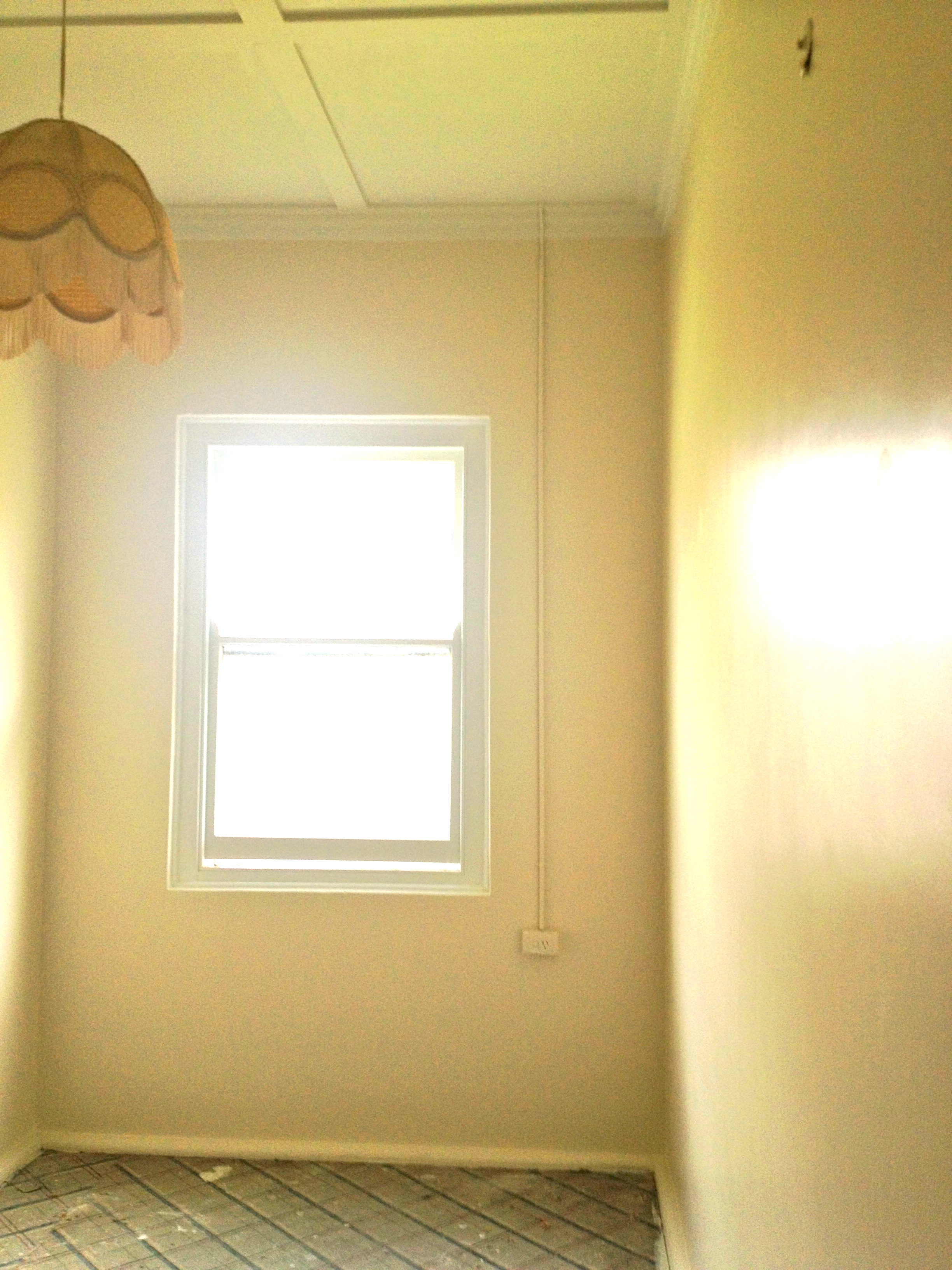
Even the old bathroom looks so much better
At this point I’d have to qualify that most of the work is purely cosmetic. The building itself is very solid and in good condition. And whilst it was purpose-built as a Convent, it is currently very practical, whether for me and family/friends or for commercial purposes. I’m not building or knocking anything down. For the most part, I am working with the current building, layout and infrastructure. The changes are mainly more of a cosmetic nature, but that is still significant.
I’ve been lucky in my tradies. Being in the country is a totally different dynamic. The downside is:
there is a limited marketplace. This is a small town and some tradies come from Mudgee which they regard almost as a different state and can charge a travelling fee. It’s maybe 40 minutes which is nothing in Sydney but in rural terms when you don’t need to travel, can add significantly to cost.
Good tradies are well-known and busy. They are in significant demand so queue up and be prepared to follow up. If you need something very specialised, you may struggle or need to compromise. Don’t get too trendy.
The upside well outweighs the negatives:
If you get a tradie by word of mouth, they will be keen to please. They know their business depends on reputation, referral and existing business (that’s why they are so busy in the first place). It’s a small community and word travels fast.
They are locals/neighbours and likely to be your friends in the future and want referrals from you – they genuinely care that you are happy with the job, you like them and can look each other in the face in future.
For the Convent, they often have a connection or value the building so are keen to do a job that is sustainable and they are aware that it will be public and often have strong views themselves as to how things should be done.
In the country, you don’t pay Sydney prices. Whilst the locals may think as a small town they get charged highly as tradies travel (there’s what’s known as a ‘Mudgee tax’ if you utilise goods and services from Mudgee) it’s not Sydney prices for labour.
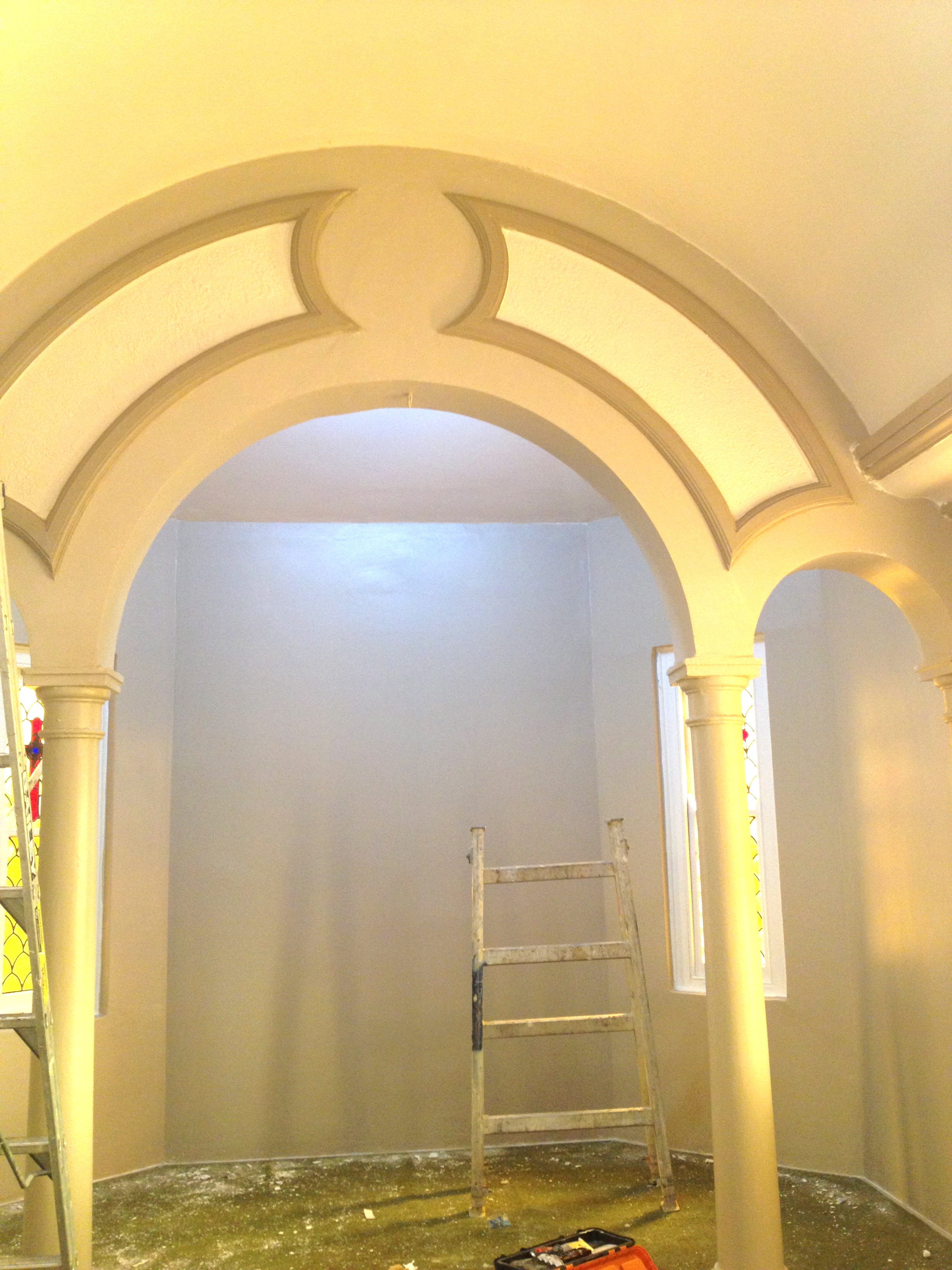
Of course the Chapel gets special treatment
Carpet for the bedrooms. Polished boards for the rest.
For me, this renovation is a quantum leap and has been made so much easier by having local tradespeople that have been so open in helping and suggesting solutions, which are often outside their special expertise. I’m finding that much of 30 years of corporate life of building relationships with trusted suppliers who understand the value of sustainable relationships, understanding clients and long term relationships works the same in the country. In fact, when corporations seek “a consistent quality client experience”, they are just trying to corporatise the best of what local businesses who understand relationships consistently deliver as a matter of course. In corporate land we sometimes forget this – this is the source of the service experience we seek to deliver.
Anyway, so far I have been so happy with the people who are helping me with the Convent. This week I’ve locked in carpets and curtains, major decisions but ones I am very happy with. It’s all very daunting, particularly whilst managing a job back in Sydney and a Sydney property that will have another future… but exciting and rewarding as well.
Coming up well – the end bedroom known as ‘Her Mother Superior’s Room’ or, in latter stages, ‘The Bishop’s Room’
The old Church sign, found inside the garage and now housed outside the garage.
I’m trying to rehome as many things as I can at the Convent – some of this is consciously not wasting. Another motivation is the desire to retain as much history as possible and make use of it in practical ways which pay homage to its heritage.
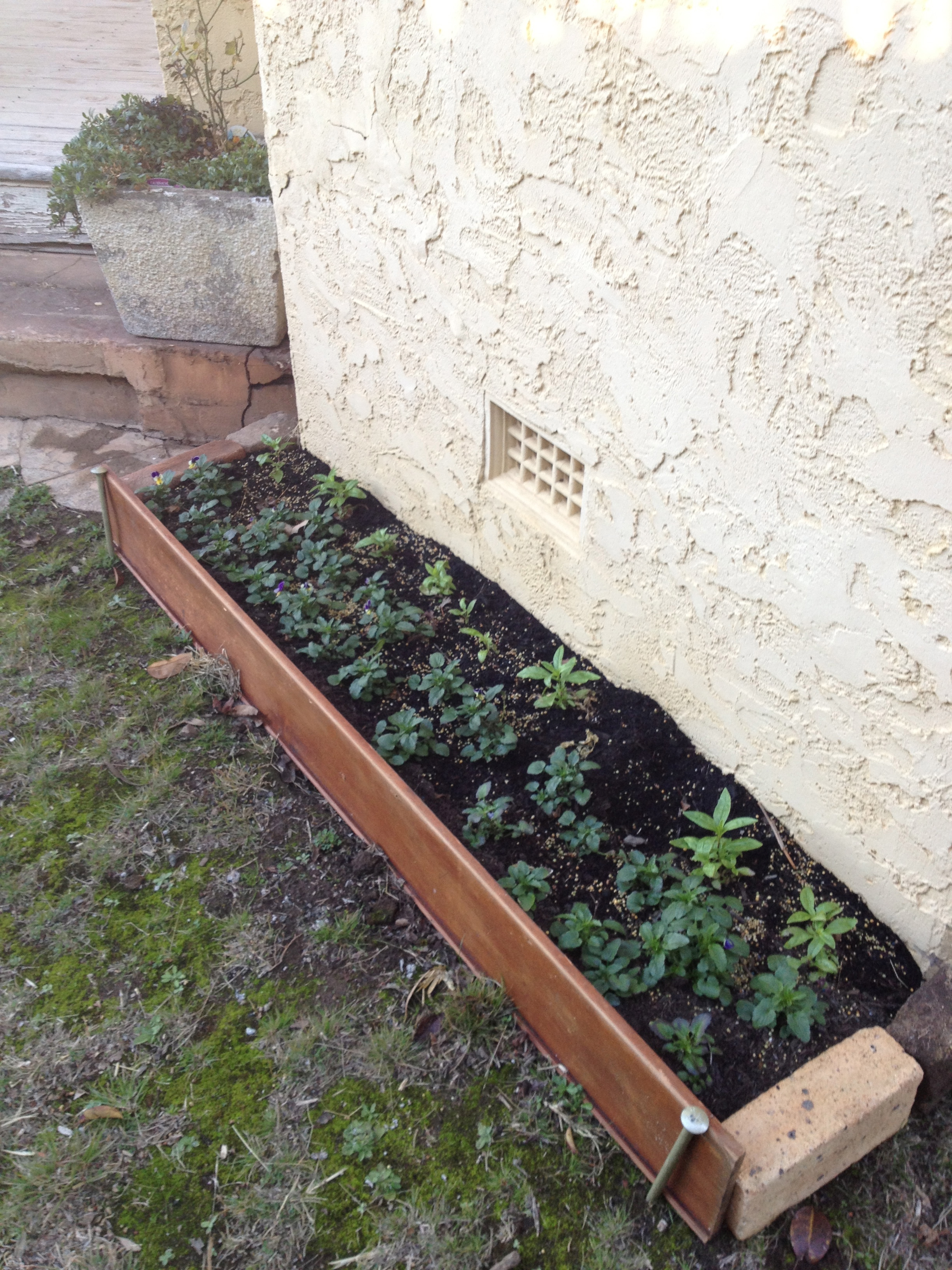
I’ve managed to find a number of different Church items in the garage, such as an old Church services sign, a processional cross and brass order of the mass plaque. An unintended re-use was when I made a garden bed just under the Chapel glass windows from a piece of timber which I later found out was from the kneeler section of a Church pew – quite serendipitous.
I don’t think this part of a kneeler though it would end up outside the Chapel as part of a flower bed.
I’m also hoping the old curtains will make good braid or rag rugs for some of the many hallways. Every piece of timber or brick (or rock) seems to find a use somewhere.
A favourite but once barren corner. Old rescued rough cast pots, old iron edging and kneeler garden bed edging.
All recyclable scraps go into one of two recycle bins and leaves and other garden clippings mostly end up there as well or topping up garden beds. A mulcher is the newest addition to help with garden refuse. I’m always seeking additional soil and mulch for the many (and growing) garden beds. This also cuts down on the tips to the trip and helps gobble up the seemingly never ending growth from the ivy.
The old hardwood fence posts are now edging three garden beds.
My favourite reuse has been the old hardwood fence posts from the damaged section of fence that was replaced. It has already been used to expand the pumpkin patch and now to edge what was a pretty but unstructured bed near my bedroom verandah. The other posts are so heavy, I can’t budge them. They are edging the privet hedge bed for now, which required just a small nudge to get them in place. If all goes to plan and the fence is finally removed, there should be plenty of extra sleepers for both the side fence and maybe even the front wall. The wire mesh for climbers – chokos and cucumbers – was rescued from life as a grid enclosing the side verandah.
I have now grown quite fond of the old wardrobes that were left post the auction of contents (‘cos no-one wanted them and were too big to move) and they are being relocated to the garage for storage. They are currently in full usage. I now don’t know what I would’ve done without them.
I’m not sure it’s legitimate recycling, but I also seem to have some sort of sewerage leak from a front pipe which I think is just from the waste pipe in the kitchen (does not appear to be the “worst” type, if you know what I mean). I have a call in with the plumber but in the meantime the roses are just loving it.
The Convent is a practical building and has been in a service role for over 80 years. It seems appropriate that she continues to “make do” where she can and I embrace her heritage.
The Convent will welcome back its regular visitors for a particularly special retreat (Friday 20 – Monday 23 September) as we celebrate a Southern Hemisphere astronomical Spring and our version of Spring Equinox over the extended weekend.
I’m hoping this will be a very special weekend for friends who have seen the Convent through from an aspiration to reality and beyond as the Convent becomes both a home to me and a welcome retreat for friends. This stay should be a little more luxurious as hopefully we will be painted and with flooring. I make no promise of having the place furnished but can offer bedrooms for guests.
For those who have more flexibility, you are welcome to stay as long as you like. However I would like you to go home some time.
Further details will issue on the itinerary, travel arrangements, workshops, work duties, menu and accompanying activities for the retreat.
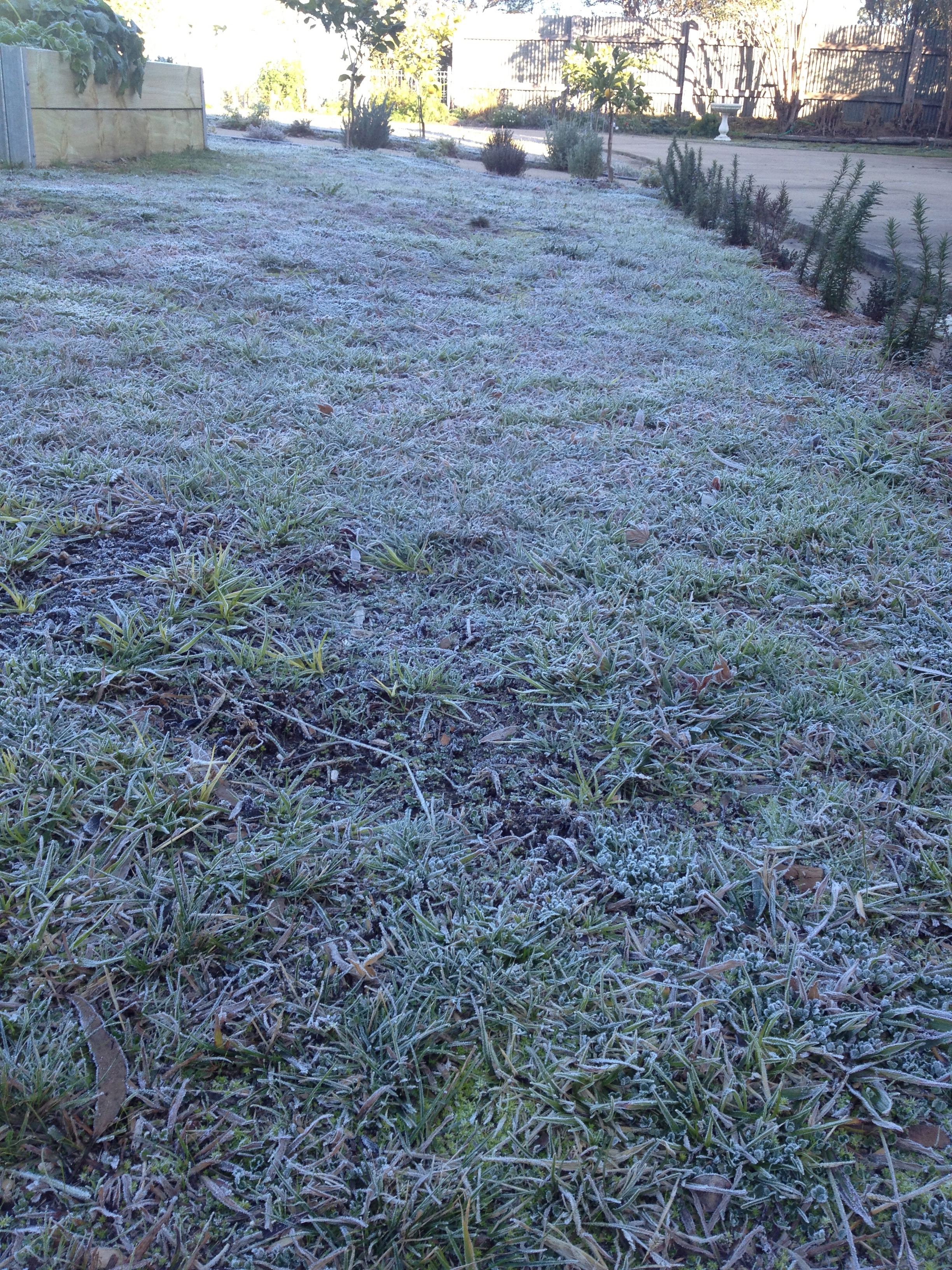
Much more savage than a dew. A footprint makes little impact
Earlier I posted about the neighbours’ threats of frosts. They weren’t joking. Last weekend was cold and heavy frosts kicked in. At 9 am the yard was still frozen over with thin ice coating everything. It is amazing to see plants and grass that look as though they have been snap frozen. It’s not snow or dew – it’s just frozen.
Fortunately these guys seem to love the frost.
On the one hand it looks quite magical. For plants that don’t like frosts, it’s deadly. Think of veg that have accidentally frozen from a too-cold fridge. Once they defrost, they can go limp – and not recover. When they dry out, they just look burnt. Some plants are semi-dormant and will be fine. Plants, like the bulbs, just love the cold. Others just hate it and die. My different varieties of beans that looked so healthy have just all burnt off – even those that seemed to be happily climbing with the peas. Peas are all fine – beans have just totally gone brown and limp – both the high and low growing ones.
This isn’t dew – the leaf is frozen.The Basil just hated the frost. I doubt it will survive. It was fine a few days ago.
It’s hard to see a healthy plant one day, see it wilting the next and a few days later, just looking burnt and dead. It happens so quickly. I’m learning fast and will be better prepared next year. One big learning is not to prune until much later. Not so much for the pruned plant, but those around. The more growth through frosts, the more protection for all the surrounding plants.
The front yard frost was quite structural. When the sun came out, the areas in the shadows cast by the fence and pillars were still totally frozen and frosted, yet everything in sun was melted. I’m shuddering at what the new Salvias in the front bed (who were quite frozen) were making of their new home. Particularly the ones that I was warned were “frost sensitive”. Uh oh!
This weekend I harvested my first set of root veg. Apparently root vegetables are the standard fare to plant for Winter. I love my soups, casseroles and roasts so this is hardly a hardship.
I was so excited this weekend to be in a position where I could harvest enough for two nights roasts (well, only one Beetroot was big enough to pick…). I managed to collect Parsnip, Swede, Turnip, Beetroot and Carrots (which were small but perfect) as well as Broccoli (which has been prolific) and Sugar Snap Peas.
I’m learning by mistakes – I will NEVER EVER plant beans again so close to Winter. I had several types in and the frosts wiped each out very early, even though they had been growing strongly. Strangely enough, most of the leafy veg – Kale, Rocket, Spinach… has gone well. The Peas seem to flourish in the cold, as do Broad Beans, although they (hopefully) crop later.
I’ll be braver in future with seeds. The seedlings I planted out from punnets have been fine, but I only have limited plants (6 – 8 as per the punnets) whereas for the seeds planted, my biggest problem is having the discipline to thin them. So I only have a small crop of Beetroot, however the neighbours are under strict instruction to start culling Turnips and any of the leafy greens that were planted by seed.
I’m very happy with the outcome for my first year of veg, but hope the soil will continue to be as giving with future crops.
This is what was still left after over a day’s full-on planting
… and am I planting! This weekend was a bit over the top and way too ambitious. Now we have passed the shortest day and it’s more daylight, I think I’ve over-reacted. The thought (threat) of being on show for the upcoming Kandos Gardens Fair has also added some impetus to my gardening. As well as the thought of seeing Spring in with a garden full of lovely growing and flowering plants.
Above is what was left after a full day of planting which also included 3 mega punnets from Bunnings, a number of lovely blue Salvias and a stack of perennials which have already found their way into the side garden bed, which is looking much more organised.
“Muncher” should help greatly with garden refuse as well as feeding garden beds
I never made it to starting the new little back garden bed near the gate. Or for that matter, starting to plant the potatoes. I did however buy a new toy, a Ryobi mulcher, which should help with both lessening the need for mulch and compost as well as reducing the trips to the tip. It’s already been put to use mulching for the Pumpkin patch (which has everything other than Pumpkins in it!).
Anyway, I managed to bring up two more camellias and azaleas from the Sydney garden, which have been rehomed on the front fence, along with a Mme Isaac Perriere rose – these are described as blowsy rampant pink roses – sounds like a loose woman. She has gone to one of the darker corners to hopefully brighten it up as she scrambles across the front wall. Three lovely deep blue salvias also went out the front, although this weekend saw very heavy frosts and some of the salvias seem appalled by this weather.
I also planted a stack more groundcovers in the shady area which struggles with grass as well as some lawn chamomile. It appears that the other chamomile (all four packets of it, which are growing so well) is the wrong kind. I didn’t know there was a specific “lawn” chamomile as well as a German one. Will be interesting to see how they go as they are both widely spread now.
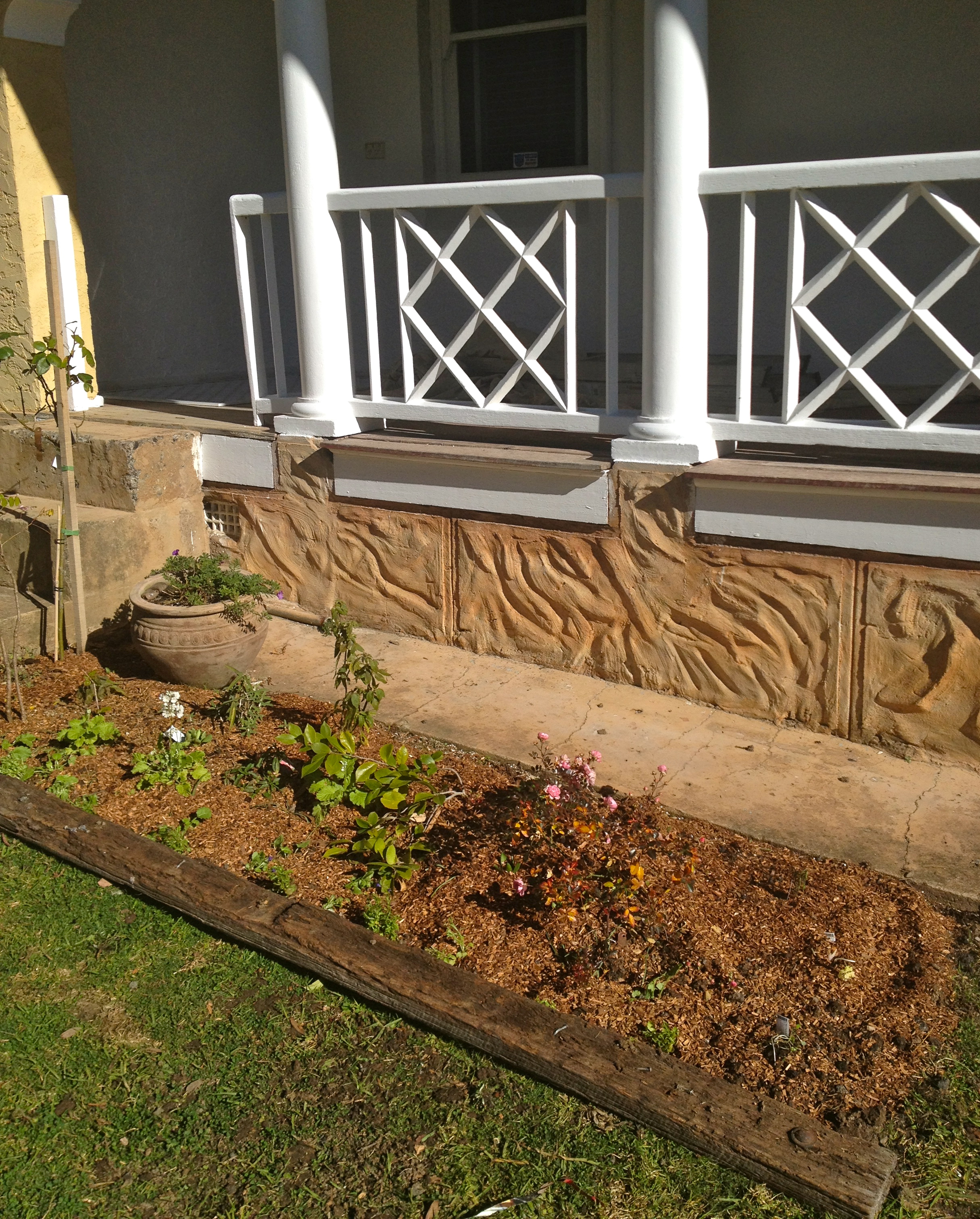
The side beds are looking tidier. But how good is the old girl looking with her facelift. Dazzlingly white.
The outside of the Convent is starting to get plenty of attention and she seems to be enjoying it. Hopefully the inside painters turn up this week.
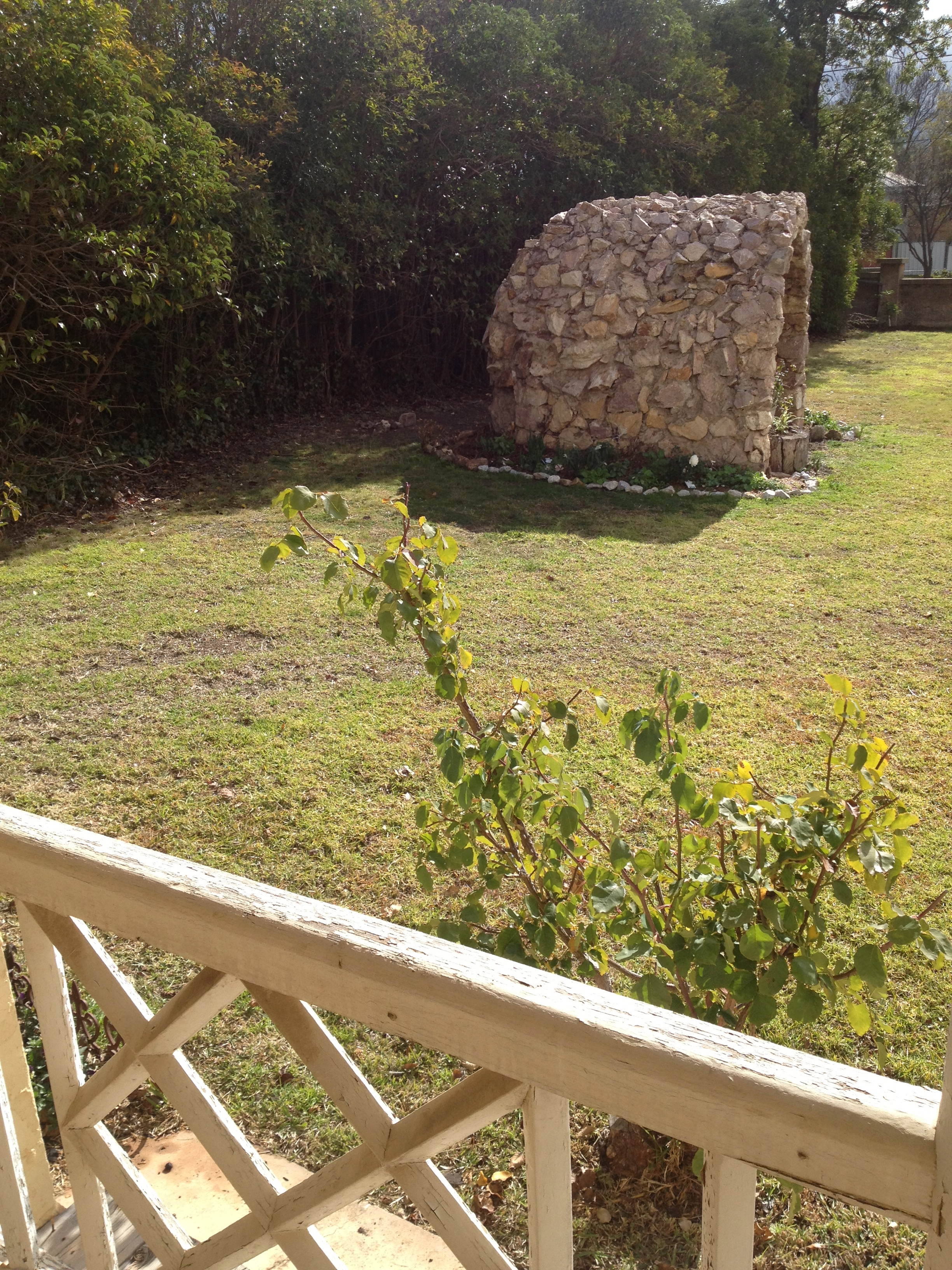
One night I looked out and was surprised by the Grotto which had an eerie light about it. Took a second to realise that it was the solar spot lights I’d installed that were only partially charged. Still, it should look effective at night time. The Grotto garden is already showing promise. The roses are healthy and I’ve rigged up wiring across the top to help train them. The plants all seem to be growing and the bulbs are just beginning to flower.
I’m getting a few more locals popping in now they see lots of activity to have a chat and look, which is particularly rewarding.
Next weekend looks like another one where I will be armed with a shovel and trowel. I’m just hoping that most of the new plants cope with the frosts.
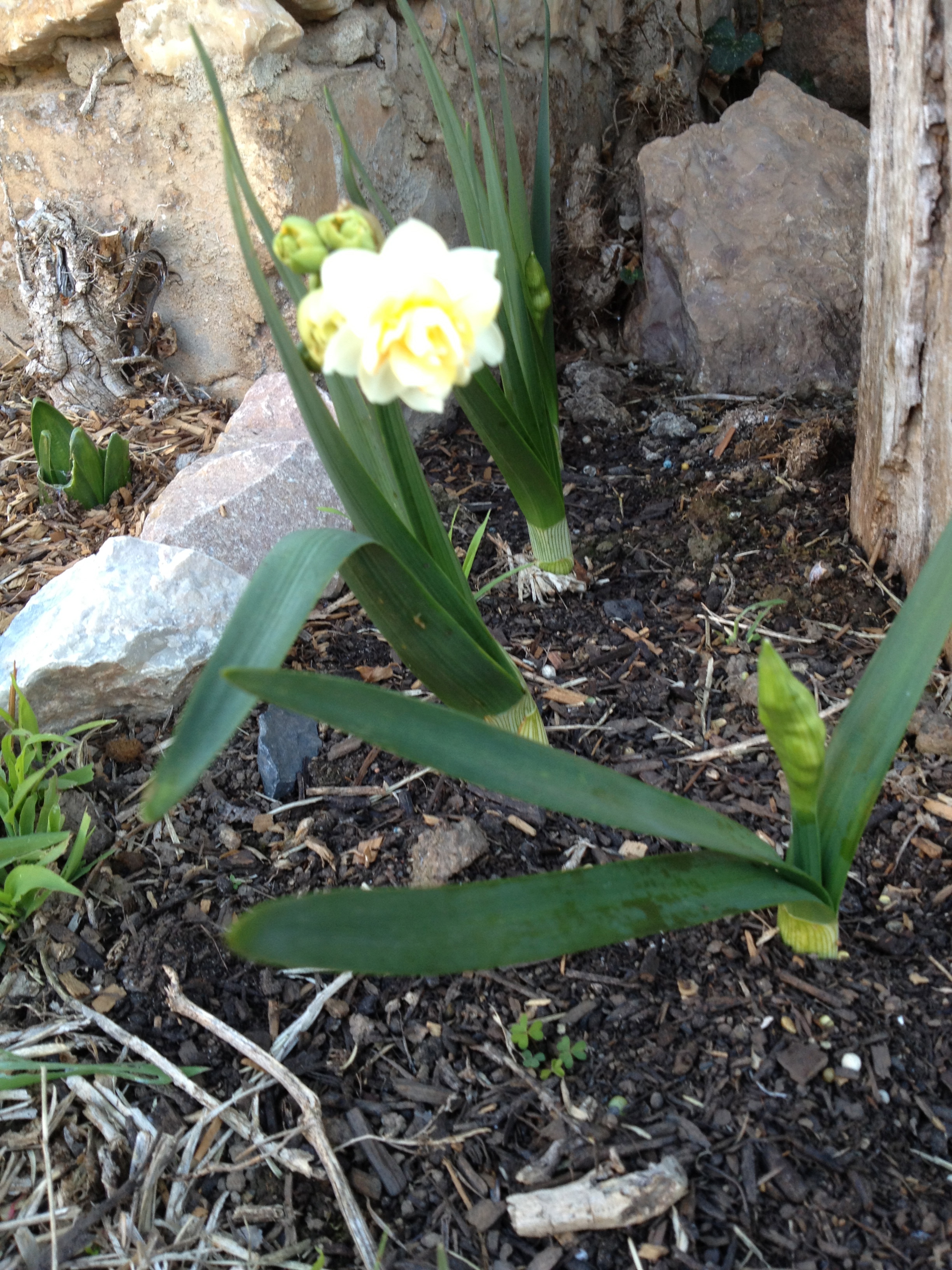
One of the first daffodils – an ErlicheerThe Grotto beds are settling in well. A mix of plants making themselves at home.
Since being in the country, I’ve become far more aware of the importance of churches locally. They play a large role in adding to the local fabric of society – and much more than spiritually. Many social networks and activities revolve around the church and they also continue to provide a safety net for the disadvantaged – as they have always done and well before social services were envisaged. Many of the churches have integrated themselves into the local community by offering venues for a wide variety of non-church activities – one of the primary ones being hosting local markets. Every weekend in Mudgee seems to be a different style market often held at one of the churches.
The churches themselves are so varied. From little modest weatherboards to impressive cathedrals. Here are a few from the area.
St Margaret’s – the “parent church” – at Mudgee
The most impressive would have to be St Margaret’s, Mudgee with its recently repolished copper spire. This is the Convent’s “parent” church and hosts the Farmer’s Market every third Saturday in its spacious grounds. The Rectory is also a beautiful sandstone building. You can’t see it in the picture, but St Mary’s also has a Grotto – just not quite as nice as mine 🙂 The other related Catholic church is St Malachy’s at Rylstone, which is a pretty sandstone church on the main street.
Havilah, tucked away on Lue Road, the back way to Mudgee
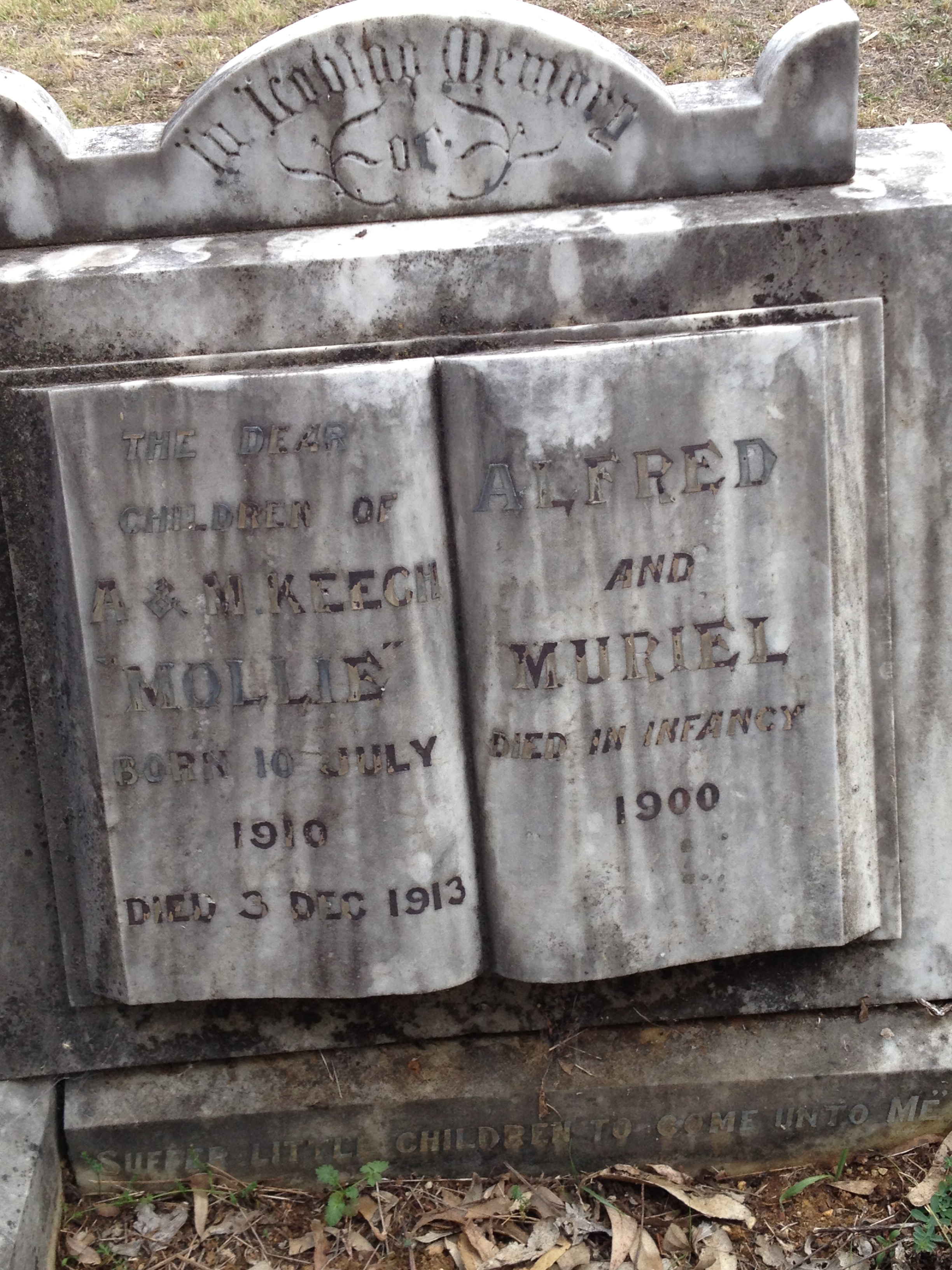
One of the most picturesque in the area has to be Havilah which is an old stone church tucked away in the countryside just past Lue on the way to Mudgee. When I drove in, a large kangaroo was quietly grazing. The headstones bear testimony to harder times, recording the deaths of toddlers in the area.
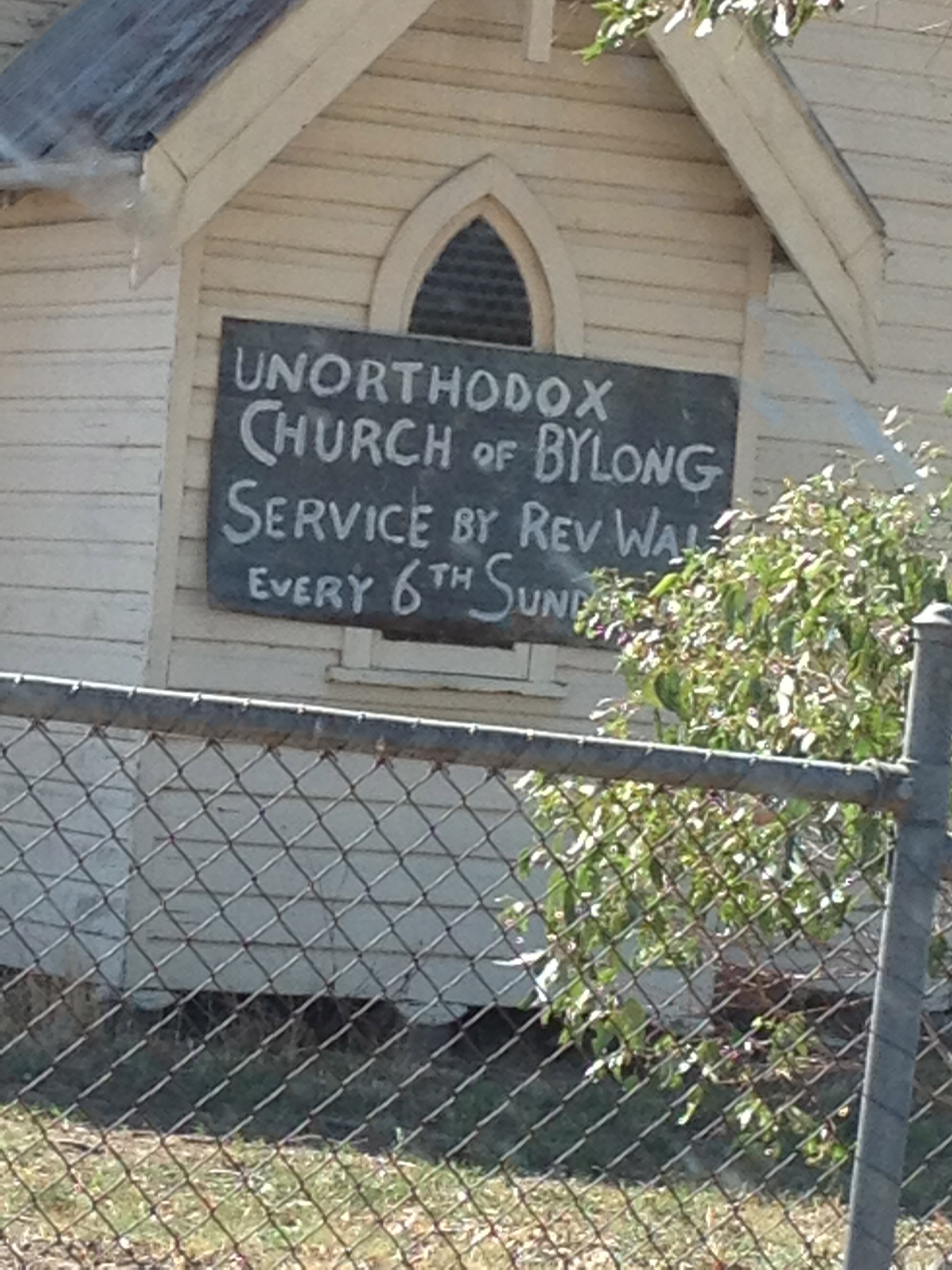
Some of the churches are very modest. Some have also been taken over by other spiritual or religious groups and I’m sure some have been turned into private homes. An old sandstone church is on the market currently in Rylstone. Below is a quirky church I passed in Bylong Valley. Not sure of the background but I’m sure the services would be less traditional.
Not sure of the minister or congregation for this one, but it looks interesting
The Mid Western region has an eclectic mix of the old wealthy grazier economy as well as more industrial/mining industry which is reflected in the vast range of architecture.
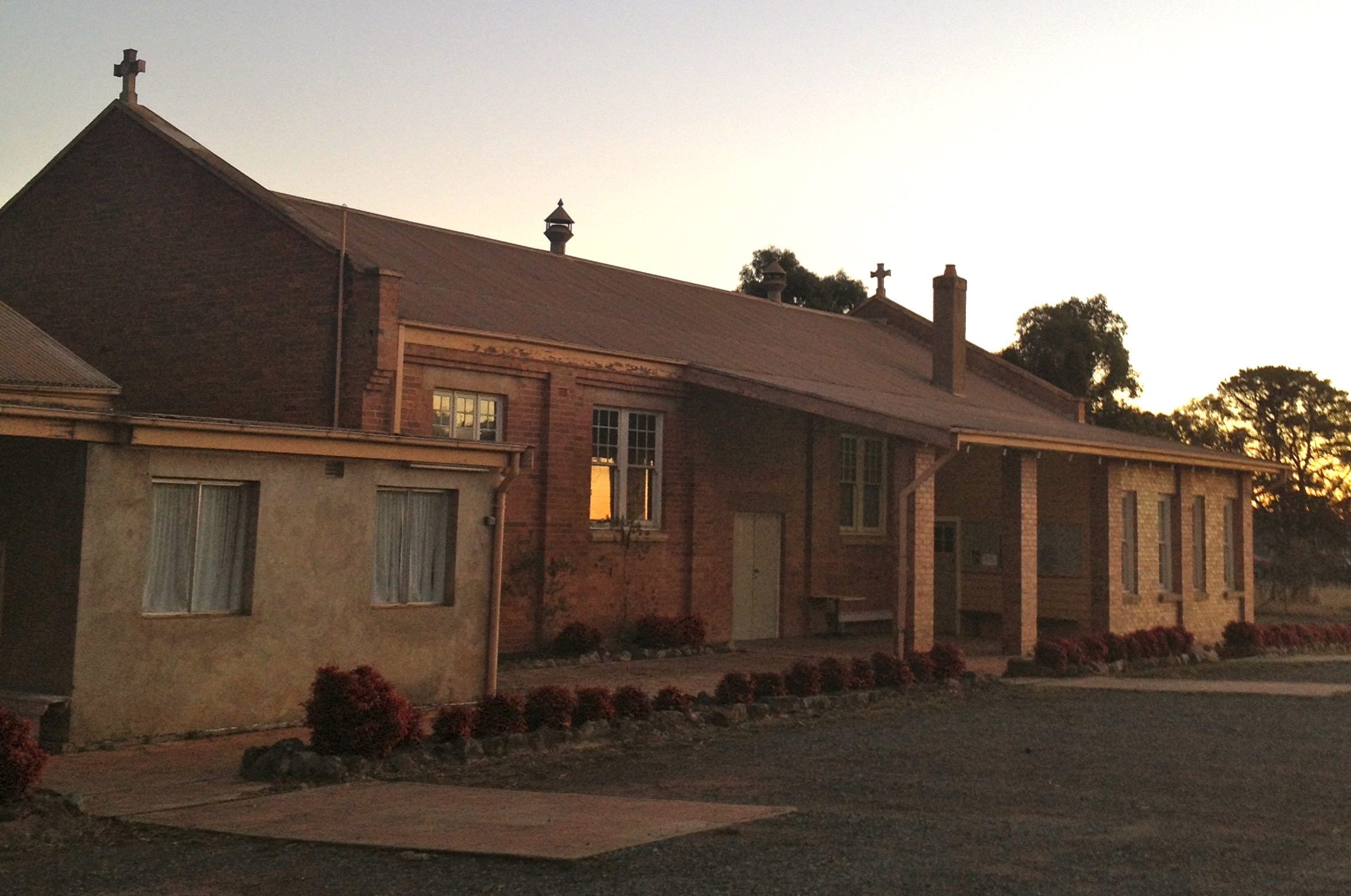
Just finishing this post off with ‘my’ church, pictured at the top, St Dominic’s,which frames the view from my backyard. Built in the early 1900’s, it reflects a ‘worker’s church’ and was originally a school by weekday and church on weekends. Whilst not an elaborate church, it has enormous charm and is just lovely inside. I feel it is representative of the town of Kandos, although I’m probably biased.
I love water features – not over-the-top fountains. I don’t even need pumps and moving water. Just water, water plants and fish. In Sydney I have a few water indulgences, but they are all at a micro level – some bowls with water and water plants as well as a wine barrel that is home to some goldfish and guppies. Well, I do live in a townhouse.
It will be hard not to have something at the Convent. I’ve put some thought into what and where and the current thinking is that I may put an inground (sounds like a swimming pool) pond between the Grotto and the Chapel verandah. It will be reasonably protected from some of the harsher sunny positions yet still get good sun for waterlillies and can be enjoyed from the verandah.
At this stage, I think I will dig it out and put in a liner-type pool to give me a bit more flexibility, as I have no idea what I will hit once I start digging. Some areas are relatively easy, others have lots of roots and some are full of rock. I’ve also seen some examples of ponds that include a “wetlands” – an area next to the main pond which is lined with a shallower area and filled with soil, but kept wet for water-logged plants, which I think would be great for watercress. Sometimes I get carried away and need to make sure it doesn’t turn into a full dam with ducks! What if I could also cultivate yabbies or trout! Hmm, maybe a concept for the block next door…
Anyway, just an idea at present. I have plenty of gardening to keep me busy before starting this. The front wall is Priority # 1 for now. I’ll try not to get distracted and have another incomplete area… maybe.
I’m thinking this area between the Grotto and Chapel verandah may work.
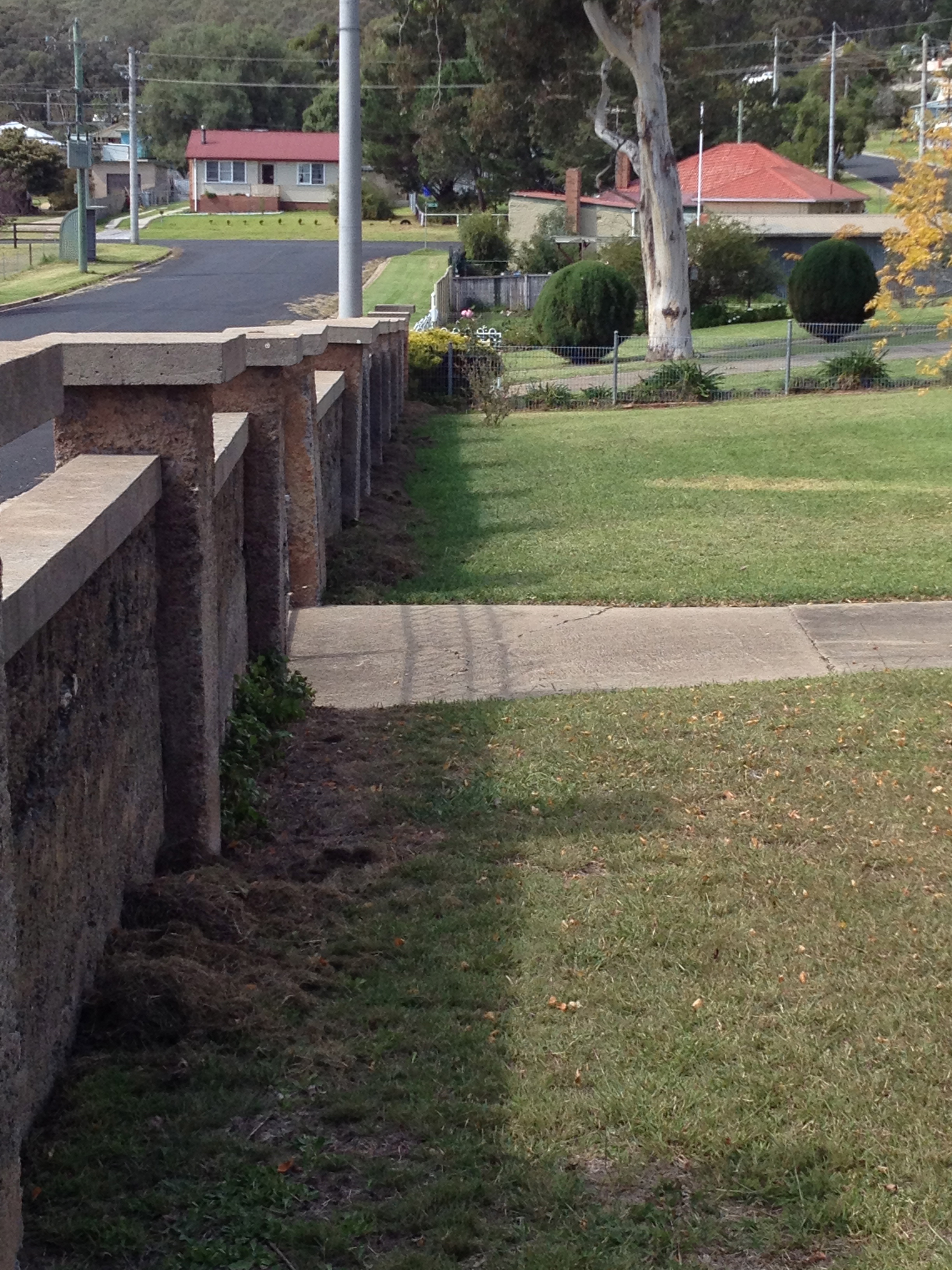
So far I haven’t been able to tell if there were ever any garden beds against the front wall which is an ash brick fence, quite common in this area. A past resident, Father Peter, said there used to be a hedge and will try and find some photos for me.
For now, there are no plantings at all along the wall – the grass runs right up to the brickwork which accentuates the bareness of the block. My plan is to have a deep bed running along the wall with some sweeps of beds emerging so it doesn’t look like a harsh straight line. The wall provides some shading and protection which hopefully means I can grow some of my favourites like camellias, azaleas and gardenias which I plan to mix in with ornamental weeping maples and cherry trees for height. I’m looking at filling in mid height with plants such as salvias for lots of colour and attracting birds, then adding in lots of perennials – and lets not forget heaps of herbs and masses of roses, including old fashioned ramblers.
My initial impression was that the soil near the wall was rock hard and I needed to build it up with digging, newspaper, layers of mulch, followed by compost over perhaps a 6 – 8 month period. However after some rainfall the past few weeks, I was happily surprised over the weekend when I experimented to find that the soil was relatively easy to dig and appeared to be good quality with plenty of cheery and healthy worms. This should significantly cut down on work and speed up the establishment of the beds. Fired up with this discovery, I promptly planted two white Azaleas either side of the front gate.
In the past with the few gardens I’ve had (I change properties rarely), the task was much less daunting – it was just a matter of improving the basics of what was already established. In this case it is much more a challenge of creating much of the garden from a blank canvas – and it’s a big garden. This means a bit more discipline and thought than required in the past. In the meantime, I’m falling back to my usual pattern- just buying what I like, putting it in and then working the beds out from there. Other than the gate Azaleas, so far I have 2 Lilacs, a transplanted Elderberry (what a mistake to think this would work in the veggie bed!), and another Azalea. A rambling rose, a Rhododendron and 2 Camellias await in pots for their next home. Oh, and a few more plants have been ordered from Diggers, including an Albertine Rose.
................... for lovers of ice cream. Your free on line magazine for sweet frozen treats. Recipes, inspiration, artisanal ideas for your delectation.

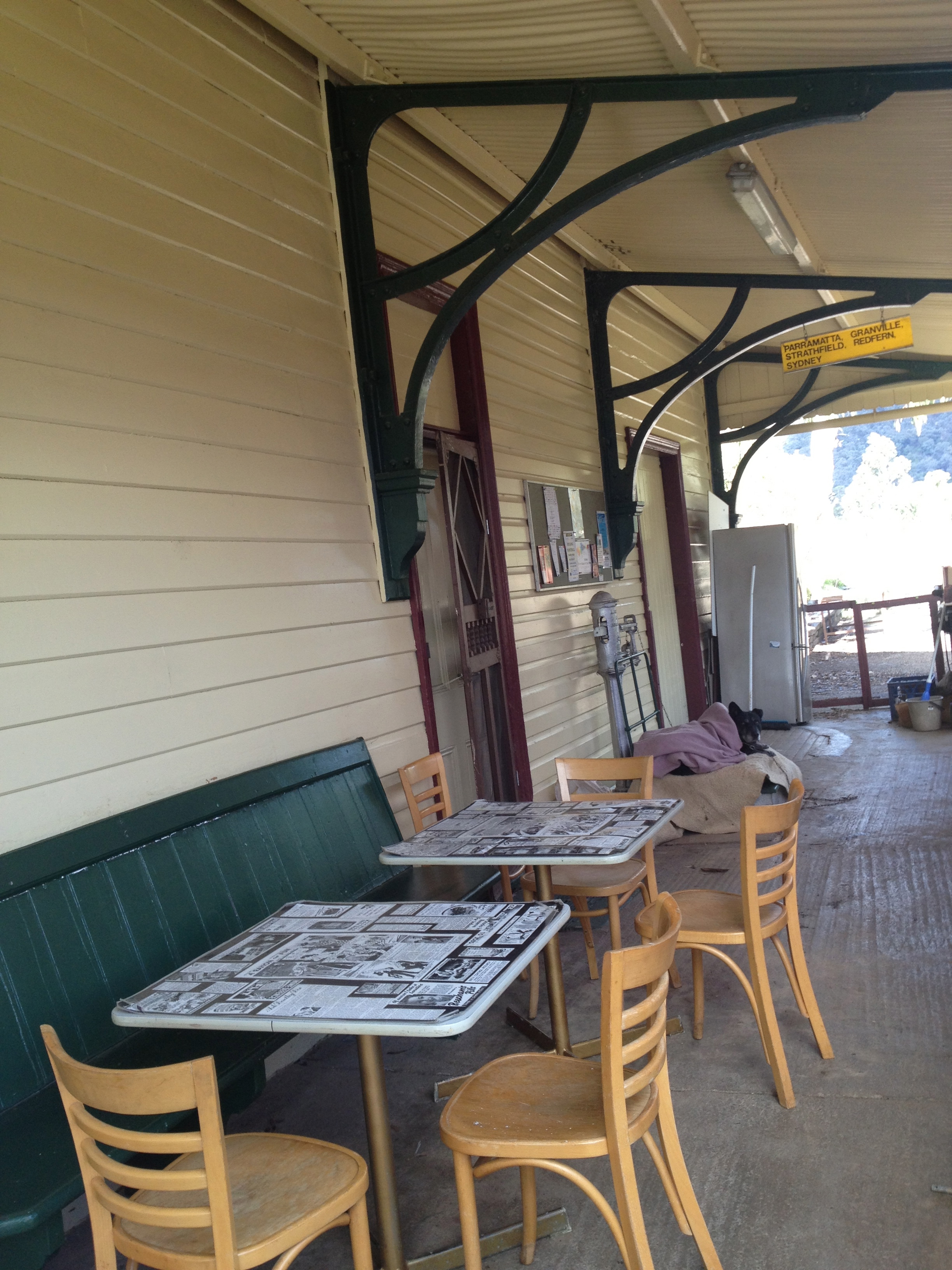
 The name of the cafe relates to it being the old railway station. The train line unfortunately no longer runs through Kandos regularly, although infrequently there is a tourist service which is a sight to behold. It would be so wonderful if the train still continued through from Lithgow to Kandos.















 CONVENT AND CHAPEL